Wednesday, August 02, 2006
More work...
Back in workland after a couple of weeks break in the Sierra Nevada mountains - surprisingly, less hot than the baking UK. Just starting work on a project developing two new foundation degrees with the School of Arts, City University. More to follow in September...
Thursday, June 29, 2006
Two new projects
Graham is just starting work on two new research projects.
The first is a study funded by Arts Council, England and DCMS on the role of the arts in community radio in the UK. This is being done with CAPE UK, and the final report will be published in March next year.
The second is a major three year study funded by the Arts and Humanities Research Council which is entitled "Creative Industries and Social Inclusion: young people's pathways through informal and community learning in the performing arts." Graham is going to be working on this with his colleague Alice Sampson at the University of East London. Working with four youth arts sites which make extensive use of different performing arts, it will take a critical look at some of the claims made for work with young people in this area - examining the participants' life courses through an ethnographic approach, and also exploring how different theories of learning and policy discourses affect how the projects work. More information in September...
The first is a study funded by Arts Council, England and DCMS on the role of the arts in community radio in the UK. This is being done with CAPE UK, and the final report will be published in March next year.
The second is a major three year study funded by the Arts and Humanities Research Council which is entitled "Creative Industries and Social Inclusion: young people's pathways through informal and community learning in the performing arts." Graham is going to be working on this with his colleague Alice Sampson at the University of East London. Working with four youth arts sites which make extensive use of different performing arts, it will take a critical look at some of the claims made for work with young people in this area - examining the participants' life courses through an ethnographic approach, and also exploring how different theories of learning and policy discourses affect how the projects work. More information in September...
Thursday, June 15, 2006
The MUD Office
The MUD Office
My brother Charlie and his band of mud artists and leisure specialists are out to colonise the blogspot blogosphere...
My brother Charlie and his band of mud artists and leisure specialists are out to colonise the blogspot blogosphere...
Sunday, June 04, 2006
the theory and practice of participatory arts
I'm in Barcelona for the closing conference of the FORTE project. Great city, lovely people and very interesting case study projects from London, Lithuania, the Basque Country and Berlin. What was striking about the event was - as happens all too often - how enthusiastic yet uncritical and vague some of the contributions were. This is a problem that the whole field has, but one that it will need to get over if it is to make the progress it deserves to make in the wider political, cultural and economic world.
However this has been a cultural and learning exchange between four projects with very different contexts and histories, and as always the informal conversations were really illuminating and useful...Because youth and community arts is such an under-resourced yet vital field of work, everyone has their own autobiographies and routes through, and often very distinguished histories of commitment to communities and excellent practice. But somehow the specifics can get lost in generalities about empowerment and enjoyment, when actually what is needed, perhaps, is a more fiercely self-critical enquiring and analytical attitude in order to pin down what is needed to move things on.
At the end of the event I attempted to pull together some of the disparate strands of conversation in my presentation, which can be downloaded here; not sure that I made a particularly good job of it...The overwhelming sense I had by the end of the event was how much practitioners need to be able to articulate more clearly what it is that they actually do...to express clearly the theories, traditions and discourses which inform these practices...to ask clearer questions... How do we develop a genuinely self-critical and searching learning culture for practitioners? And linked to this there's a hunger for information, shared knowledge, training and development...
There's plenty of material out there - not least in my book but also in many other places - a couple of useful starting points might be the US based website www.communityarts.net, some of the links from the old NewVIc Pathways into Creativity archive, and the fantastic encyclopaedia of informal education, which whenever I look at it makes me think that I don't know anything, which is probably a good thing...
However this has been a cultural and learning exchange between four projects with very different contexts and histories, and as always the informal conversations were really illuminating and useful...Because youth and community arts is such an under-resourced yet vital field of work, everyone has their own autobiographies and routes through, and often very distinguished histories of commitment to communities and excellent practice. But somehow the specifics can get lost in generalities about empowerment and enjoyment, when actually what is needed, perhaps, is a more fiercely self-critical enquiring and analytical attitude in order to pin down what is needed to move things on.
At the end of the event I attempted to pull together some of the disparate strands of conversation in my presentation, which can be downloaded here; not sure that I made a particularly good job of it...The overwhelming sense I had by the end of the event was how much practitioners need to be able to articulate more clearly what it is that they actually do...to express clearly the theories, traditions and discourses which inform these practices...to ask clearer questions... How do we develop a genuinely self-critical and searching learning culture for practitioners? And linked to this there's a hunger for information, shared knowledge, training and development...
There's plenty of material out there - not least in my book but also in many other places - a couple of useful starting points might be the US based website www.communityarts.net, some of the links from the old NewVIc Pathways into Creativity archive, and the fantastic encyclopaedia of informal education, which whenever I look at it makes me think that I don't know anything, which is probably a good thing...
Saturday, April 29, 2006
The tyranny of the written word in policy discussions...
Unaccustomed and resistant to the written word as she is, Jackie has not been that willing to participate in this blog . However, she has been moved to make an entry via the written medium to make a stand against those who use the written medium and wield power with it to remind them that "in the beginning was the word." This, in her interpretation, was not the written word and belongs to the realm of felt sense and story-telling. After this came image, and then the written word including invented spelling and weird punctuation. She would like to ask why is it that the written word is required more often than not when attempting to change policy? Why is it that story-telling and visual imagery are not regarded with as much esteem when it comes to providing evidence for change?
Oral traditions, image making and music are just as valid methods for presenting a case and can be more beautiful, seductive and pervasive, unless the policy is written as poetry!
Oral traditions, image making and music are just as valid methods for presenting a case and can be more beautiful, seductive and pervasive, unless the policy is written as poetry!
Wednesday, April 19, 2006
Neo-futurism
Jackie writes:
the bit I like best about the neo-futurists is that they place themselves into alien interdisciplinary areas - a form of artistic practice that is a performative and political intervention into unexpected places...like working with an artistic sensibility inside a health bureaucracy...and, perhaps adopting a bit of the manifesto from the Chicago Neo-Futurarium might be helpful...:
The Neo-Futurists are an ensemble of artists who write, direct, and perform their own work dedicated to social, political, and personal enlightenment in the form of audience-interactive conceptual theater.
We are dedicated to:
1. Strengthening the human bond between performer and audience. We feel that the more sincere and genuine we can be on stage, the greater will be the audience's identification with the unadorned people and issues before them.
2. Embracing a form of non-illusory theater in order to present our lives and our ideas as directly as possible. All of our plays are set on the stage in front of the audience. All of our characters are ourselves. All of our stories really happened. All of our tasks are actual challenges. We do not aim to "suspend the audience's disbelief" but to create a world where the stage is a continuation of daily life.
3. Embracing the moment through audience interaction and planned obsolescence. In order to keep ourselves as alive on stage as possible, we interweave elements of chance and change -- contradicting the expected and eliminating the permanent.
4. Presenting inexpensive art for the general public. We aim to influence the widest audience possible by keeping our ticket prices affordable and our productions intellectually and emotionally challenging yet accessible.
Source: 100 Neo-Futurist Plays from Too Much Light Makes The Baby Go Blind (Chicago Plays, 1993)
the bit I like best about the neo-futurists is that they place themselves into alien interdisciplinary areas - a form of artistic practice that is a performative and political intervention into unexpected places...like working with an artistic sensibility inside a health bureaucracy...and, perhaps adopting a bit of the manifesto from the Chicago Neo-Futurarium might be helpful...:
The Neo-Futurists are an ensemble of artists who write, direct, and perform their own work dedicated to social, political, and personal enlightenment in the form of audience-interactive conceptual theater.
We are dedicated to:
1. Strengthening the human bond between performer and audience. We feel that the more sincere and genuine we can be on stage, the greater will be the audience's identification with the unadorned people and issues before them.
2. Embracing a form of non-illusory theater in order to present our lives and our ideas as directly as possible. All of our plays are set on the stage in front of the audience. All of our characters are ourselves. All of our stories really happened. All of our tasks are actual challenges. We do not aim to "suspend the audience's disbelief" but to create a world where the stage is a continuation of daily life.
3. Embracing the moment through audience interaction and planned obsolescence. In order to keep ourselves as alive on stage as possible, we interweave elements of chance and change -- contradicting the expected and eliminating the permanent.
4. Presenting inexpensive art for the general public. We aim to influence the widest audience possible by keeping our ticket prices affordable and our productions intellectually and emotionally challenging yet accessible.
Source: 100 Neo-Futurist Plays from Too Much Light Makes The Baby Go Blind (Chicago Plays, 1993)
Tuesday, April 11, 2006
Current listening and reading
Livin' Fear of James Last - great compilation of Steve Stapleton aka Nurse With Wound's work
The culture of the new capitalism by Richard Sennett - whilst bits of it are slightly off the mark, especially in the rather nostalgic tone he adopts for paternalistic labour practices, it's another coruscating attack on the dislocating and disorientating effects of the revolution from above propagated by flexible globalised capitalism. And lots of really valuable analysis and observation about the nature of professional identities in the neoliberal workscape.
The future of ideas: the fate of the commons in a connected world by Lawrence Lessig - what may happen if the net and its technologies gets effectively privatised. Truisms that some might question about the desirability of market economics and the sanctity of private property rights aside, this is (so far) an illuminating and accessible read about why shared intellectual property matters.
and I'm re-reading Science, Order and Creativity by David Bohm and David Peat - full of useful nuggets (I may do a separate blog entry in honour of it...)
The culture of the new capitalism by Richard Sennett - whilst bits of it are slightly off the mark, especially in the rather nostalgic tone he adopts for paternalistic labour practices, it's another coruscating attack on the dislocating and disorientating effects of the revolution from above propagated by flexible globalised capitalism. And lots of really valuable analysis and observation about the nature of professional identities in the neoliberal workscape.
The future of ideas: the fate of the commons in a connected world by Lawrence Lessig - what may happen if the net and its technologies gets effectively privatised. Truisms that some might question about the desirability of market economics and the sanctity of private property rights aside, this is (so far) an illuminating and accessible read about why shared intellectual property matters.
and I'm re-reading Science, Order and Creativity by David Bohm and David Peat - full of useful nuggets (I may do a separate blog entry in honour of it...)
Friday, March 31, 2006
Quick roundup of recent work
Graham has finished work on the section on leadership, initial teacher training and CPD for the 'Roberts Review' of creativity and schools commissioned by the DFES and the DCMS, which he wrote jointly with Pat Cochrane of CAPE UK. Also with CAPE UK, he's working on the evaluation of their segment of the Paul Hamlyn Foundation's Musical Futures project.
The Teacher-Artist Partnership (TAP) programme has come to the end of it's first year of operation - the next cohort, which will double in size, will begin in September 2006.
For NESTA Graham is working with Lister Community School in Newham who are developing a large scale digital media learning project with all of their year 8 students.
The FORTE European youth arts research project is coming to a close, with a conference scheduled in Barcelona in June. More information to follow.
The Teacher-Artist Partnership (TAP) programme has come to the end of it's first year of operation - the next cohort, which will double in size, will begin in September 2006.
For NESTA Graham is working with Lister Community School in Newham who are developing a large scale digital media learning project with all of their year 8 students.
The FORTE European youth arts research project is coming to a close, with a conference scheduled in Barcelona in June. More information to follow.
Monday, March 13, 2006
Journeys Across my City goes further...

Some more screenings for the Journeys Across My City: Buenos Aires films:
Propeller TVTuesday 14th March
Same Difference Festival, Slough, 2nd April
East End Film Festival, London
April 29th
1st Homer International Film Festival for Children, Alaska
April 8th - 13th May
I'm particularly excited about the last one...
(photograph copyright Mark Raeburn and Redcurrent Films)
Sunday, January 15, 2006
Winter 2006 books
Culture and Pedagogy by Robin Alexander
Sweeping comparative study of primary education in five countries - taking a long view of the differences both at classroom and at policy level in national educational systems
Performance Studies: an introduction by Richard Schechner
Erudite and very, very useful summary of some of the key tenets of performance studies. An emergent classic.
Dialogic Inquiry: toward a sociocultural practice and theory of education by Gordon Wells
Hardcore theoretical look at inquiry-based learning, drawing particularly on Vygotsky and M.A.K.Halliday
Sweeping comparative study of primary education in five countries - taking a long view of the differences both at classroom and at policy level in national educational systems
Performance Studies: an introduction by Richard Schechner
Erudite and very, very useful summary of some of the key tenets of performance studies. An emergent classic.
Dialogic Inquiry: toward a sociocultural practice and theory of education by Gordon Wells
Hardcore theoretical look at inquiry-based learning, drawing particularly on Vygotsky and M.A.K.Halliday
Saturday, December 31, 2005
events and conferences that Graham contributed to in 2005
Building a Creative Learning Culture in Newham, Stratford Circus, 12th December 2005
Risky Business Symposium, Melbourne, Australia, 21st-22nd October 2005
NFER conference: Becoming a research-engaged school, London, 27th September 2005
International Association for the Study of Popular Music: Rome 2005 Conference, 25 - 30 July 2005
Exploring Internationalism seminar, London 2012, 22nd June 2005
University College Chichester staff development day, 15th June 2005
FORTE London meeting, 10th June 2005
Creative Learning Spaces, University of Greenwich, 25th April 2005
Design and Performance research cluster seminar, Hinckley, 21st April 2005
Risky Business Symposium, Melbourne, Australia, 21st-22nd October 2005
NFER conference: Becoming a research-engaged school, London, 27th September 2005
International Association for the Study of Popular Music: Rome 2005 Conference, 25 - 30 July 2005
Exploring Internationalism seminar, London 2012, 22nd June 2005
University College Chichester staff development day, 15th June 2005
FORTE London meeting, 10th June 2005
Creative Learning Spaces, University of Greenwich, 25th April 2005
Design and Performance research cluster seminar, Hinckley, 21st April 2005
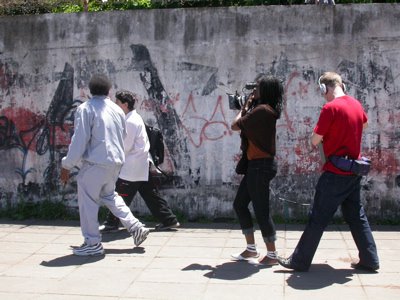
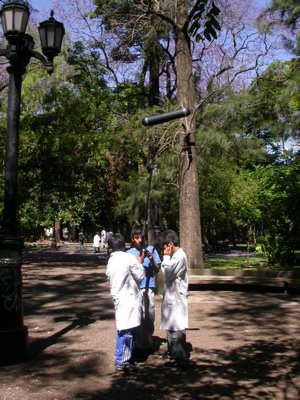

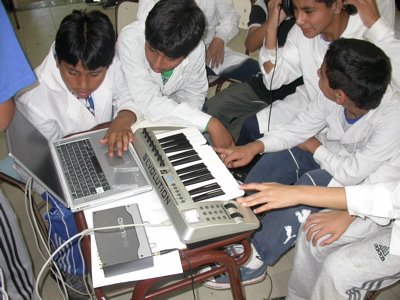
images from 2004 and 2005
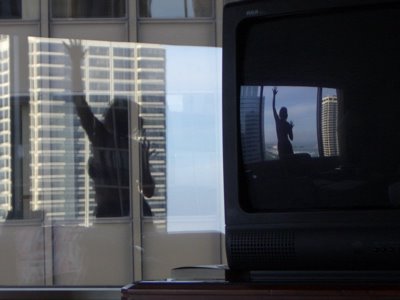
on the eve of the new year it seems to make sense to upload a few pictures from the last 18 months or so. (and I've just learned how to do this). So - here goes:
catwoman in chicago
images from 2005 (1)
Friday, December 02, 2005
a long month
four weeks from hell so I've not had time to post anything, let alone anything erudite here for a while. Some random reflections on events I've been at this autumn:
The Catalyst conference in Manchester which was in turns annoying and vague. A gathering of lots of interesting people but somehow the programme was set up in such a way that it was really difficult to find any spaces for meaningful conversation. And the charlatan Ben Zander's trivial and patronising musings on leadership were enough to force me away from the event a day earlier than I had planned. What a waste of money to put all those distinguished and intelligent people in a room and make them listen to such vacuous nonsense...
The Open Secrets seminar series that Demos has organised - both events I've attended have brought together a decent cross-section of people from the very top of the education and public services tree with practitioners and those like me that shuttle between different worlds. It's been good that a space has been created which draws together people from these different worlds to debate the hot issue of how you do innovation better; one obvious observation is that perhaps if more of these sorts of conversations were an everyday occurrence in education institutions then change might be more readily precipitated...
I went to the launch of The Turning World which is Rose Fenton and Lucy Neal's reflections on their extraordinary quarter century at LIFT. The book tells the story of all the artists, companies and happenings that LIFT brought to London since their 1983 debut. One of my absolutely favourite organisations, LIFT has constantly cut through navel-gazing and pretension that passes for contemporary theatre in many corners of London and brought work into being which is constantly challenging, vexing, mould breaking, etc etc. It's been a continual privilege to have been able to work with LIFT over the last nine or so years. What is so distinctive about LIFT is that it has a catalytic effect on the people touched by the work - it enables people to make journeys and transitions of their own - an example of redistributive leadership in action - (more on that in another post)
I went to Melbourne for the Risky Business conference which featured a really wide range of, in the main, well conceived and executed research projects documenting various arts interventions with young people deemed 'at risk.' What was so refreshing about the event (in spite of my jetlag and occasional sleepiness) was the openness with which the debates were conducted. There was a sharpness about recognising the double-tongued discourses of risk and 'exclusion' when applied to young people, when the last thing they need is to be labelled as is 'risky' and 'excluded'...a book of papers from the conference is planned in the new year and I'm looking forward to it...
I've been in Barcelona a couple of times to set up the teacher-artist partnership exchange. Every time I am in that city I am struck by how public culture, street culture, urbanism and outdoor discourse permeates the whole place...partly climate and partly the industrious and intellectual Catalan sharp and stylish hunger for knowledge and creativity...the big challenge seems to be about inclusion and diversity - how does this highly evolved urban culture learn how to deal with difference and develop education systems which allow access into this urban culture for all? How does a justifiable pride in the extraordinary regeneration story translate into education and learning systems in which all young people can participate, particularly in an arts scene where there is an apparently unstoppable supply of 'talent' in any case ? It may be the home of the 'learning city'movement but there seems still to be a long way to go in opening up further and higher education institutions to participation. I may be doing some more thinking about that in 2006. We'll see. There may also be some parallels to be drawn between what is currently happening in Glasgow's arts education planning and what is happening in Barcelona. Or maybe not.
I've spent far too much time in airport land and passenger processing systems. As the government hypes up the cold weather and threat of energy crisis further in order to build the strange logic (and weird and scary science) around nuclear power, I'm conscious that I've personally done precious little to help the case that our insatiable hunger for energy is at the root of the issue. I've just been lining the pockets of the airlines and the oil companies. No need to rehearse all the arguments here, but if we could just have a serious energy conservation and usage reduction policy we might be able to reduce our dependence on gas guzzling and gigawatts. But I'm utterly hypocritical because I've spent far too much time whizzing around to make a credible argument. If even more people continue to behave like me (as they appear to be doing) we really are staring at the edge of the abyss in environmental terms.
I went to the Designing for the 21st Century 'reflections and projections' conference in Glasgow. This was another useful collection of very disparate projects, very interdiscipinary, very divergent - although, as with so many things, there was a lack of representation from beyond the citadels of higher education in spite of the initiative being about collaboration, knowledge exchange, etc. There was an overwhelming consensus, in spite of this not being the explicit aim of the initiative, that ecological catastrophe is the key design challenge over the next thirty years: and that all designers in whatever sense need to be thinking about this. Design in this sense is about survival - social architecture, intelligent urban systems, re-use and recycling of materials, design for longevity and adaptability, entredonneurship (the first time I've heard that word used, and it deals with some of the problems of the 'social enterprise' model rather neatly I think) and - what I'm interested in - the design of learning systems that build capacity for dialogue, exchange and progression will all be crucial.
The Catalyst conference in Manchester which was in turns annoying and vague. A gathering of lots of interesting people but somehow the programme was set up in such a way that it was really difficult to find any spaces for meaningful conversation. And the charlatan Ben Zander's trivial and patronising musings on leadership were enough to force me away from the event a day earlier than I had planned. What a waste of money to put all those distinguished and intelligent people in a room and make them listen to such vacuous nonsense...
The Open Secrets seminar series that Demos has organised - both events I've attended have brought together a decent cross-section of people from the very top of the education and public services tree with practitioners and those like me that shuttle between different worlds. It's been good that a space has been created which draws together people from these different worlds to debate the hot issue of how you do innovation better; one obvious observation is that perhaps if more of these sorts of conversations were an everyday occurrence in education institutions then change might be more readily precipitated...
I went to the launch of The Turning World which is Rose Fenton and Lucy Neal's reflections on their extraordinary quarter century at LIFT. The book tells the story of all the artists, companies and happenings that LIFT brought to London since their 1983 debut. One of my absolutely favourite organisations, LIFT has constantly cut through navel-gazing and pretension that passes for contemporary theatre in many corners of London and brought work into being which is constantly challenging, vexing, mould breaking, etc etc. It's been a continual privilege to have been able to work with LIFT over the last nine or so years. What is so distinctive about LIFT is that it has a catalytic effect on the people touched by the work - it enables people to make journeys and transitions of their own - an example of redistributive leadership in action - (more on that in another post)
I went to Melbourne for the Risky Business conference which featured a really wide range of, in the main, well conceived and executed research projects documenting various arts interventions with young people deemed 'at risk.' What was so refreshing about the event (in spite of my jetlag and occasional sleepiness) was the openness with which the debates were conducted. There was a sharpness about recognising the double-tongued discourses of risk and 'exclusion' when applied to young people, when the last thing they need is to be labelled as is 'risky' and 'excluded'...a book of papers from the conference is planned in the new year and I'm looking forward to it...
I've been in Barcelona a couple of times to set up the teacher-artist partnership exchange. Every time I am in that city I am struck by how public culture, street culture, urbanism and outdoor discourse permeates the whole place...partly climate and partly the industrious and intellectual Catalan sharp and stylish hunger for knowledge and creativity...the big challenge seems to be about inclusion and diversity - how does this highly evolved urban culture learn how to deal with difference and develop education systems which allow access into this urban culture for all? How does a justifiable pride in the extraordinary regeneration story translate into education and learning systems in which all young people can participate, particularly in an arts scene where there is an apparently unstoppable supply of 'talent' in any case ? It may be the home of the 'learning city'movement but there seems still to be a long way to go in opening up further and higher education institutions to participation. I may be doing some more thinking about that in 2006. We'll see. There may also be some parallels to be drawn between what is currently happening in Glasgow's arts education planning and what is happening in Barcelona. Or maybe not.
I've spent far too much time in airport land and passenger processing systems. As the government hypes up the cold weather and threat of energy crisis further in order to build the strange logic (and weird and scary science) around nuclear power, I'm conscious that I've personally done precious little to help the case that our insatiable hunger for energy is at the root of the issue. I've just been lining the pockets of the airlines and the oil companies. No need to rehearse all the arguments here, but if we could just have a serious energy conservation and usage reduction policy we might be able to reduce our dependence on gas guzzling and gigawatts. But I'm utterly hypocritical because I've spent far too much time whizzing around to make a credible argument. If even more people continue to behave like me (as they appear to be doing) we really are staring at the edge of the abyss in environmental terms.
I went to the Designing for the 21st Century 'reflections and projections' conference in Glasgow. This was another useful collection of very disparate projects, very interdiscipinary, very divergent - although, as with so many things, there was a lack of representation from beyond the citadels of higher education in spite of the initiative being about collaboration, knowledge exchange, etc. There was an overwhelming consensus, in spite of this not being the explicit aim of the initiative, that ecological catastrophe is the key design challenge over the next thirty years: and that all designers in whatever sense need to be thinking about this. Design in this sense is about survival - social architecture, intelligent urban systems, re-use and recycling of materials, design for longevity and adaptability, entredonneurship (the first time I've heard that word used, and it deals with some of the problems of the 'social enterprise' model rather neatly I think) and - what I'm interested in - the design of learning systems that build capacity for dialogue, exchange and progression will all be crucial.
Friday, October 28, 2005
This month's essential reading
Willing Slaves: how the overwork culture is ruling our lives, by Madeleine Bunting
Babylon and Beyond: the economics of anti-capitalist, anti-globalist and radical green movements, by Derek Wall
City of Panic, by Paul Virilio
Babylon and Beyond: the economics of anti-capitalist, anti-globalist and radical green movements, by Derek Wall
City of Panic, by Paul Virilio
Journeys Across My City goes to Barcelona
The Buenos Aires films are being screened in Barcelona as part of the international children's television festival on November 15th. They are also being screened at the Lineout Can Film Festival in Leicester this weekend, and were recently shown again in Sydney. It's nice to see them travelling so well and so far...
More information from Redcurrent Films.
Graham is off to Barcelona again this week to plan the international exchange for the Teacher Artist Partnership programme and also to plot future developments with Journeys Across My City...
More information from Redcurrent Films.
Graham is off to Barcelona again this week to plan the international exchange for the Teacher Artist Partnership programme and also to plot future developments with Journeys Across My City...
Sunday, September 18, 2005
Marimekko exhibition
The Lighthouse in Glasgow is currently hosting a small but fascinating retrospective exhibition about the work of Marimekko, that superb and innovative design/fashion company that became synonymous with Finland's renaissance in the 1960s and 1970s. What Armi Ratia, who founded Marimekko, understood was that the democratic modernism which underpinned the optimistic and sunny culture of the business would benefit both producers and consumers: a kind of updated Bauhaus and William Morris sprit which aimed to democratise radical design, extending beyond clothes into the whole domestic environment. Perhaps no coincidence that 95% of their employees are still women.
The company's design culture was prophetic and pre-figurative in many ways: they rapidly moved beyond boldly printed textiles, and carefully made clothes with clean lines, into accessories, furniture, and thence into architecture and wider design. Marimekko became a total design concept but without cultishness or pretension- because it maintained an ironic, playful, eclectic sprit. The fashion philosophy was always about much more than clothes, and they never designed just for a skinny young minority. Hugely influential, hugely important, they pioneered an ethical, modernist, optimistic aesthetic that still holds promise. This book tells the story. And this article about the exhibition recently appeared in Scotland on Sunday.
The company's design culture was prophetic and pre-figurative in many ways: they rapidly moved beyond boldly printed textiles, and carefully made clothes with clean lines, into accessories, furniture, and thence into architecture and wider design. Marimekko became a total design concept but without cultishness or pretension- because it maintained an ironic, playful, eclectic sprit. The fashion philosophy was always about much more than clothes, and they never designed just for a skinny young minority. Hugely influential, hugely important, they pioneered an ethical, modernist, optimistic aesthetic that still holds promise. This book tells the story. And this article about the exhibition recently appeared in Scotland on Sunday.


Subscribe to:
Posts (Atom)