A new publication from Arts Council England and the Department of Health, with a foreword by both the minister for health and the minister for culture:
"This prospectus produced jointly by the Department of Health and Arts Council England celebrates and promotes the benefits of the arts in improving everyone’s wellbeing, health and healthcare, and its role in supporting those who work in and with the National Health Service. The prospectus shows that the arts can, and do, make a major contribution to key health and wider community issues.
This publication stems from the recommendations of the Review of Arts and Health Working Group, commissioned by the Department of Health. A copy of the review can be downloaded from http://www.dh.gov.uk."
Taken together with pronouncements from the Scottish Executive on the arts and mental health and also the requirement for all NHS Boards in Scotland to have design champions for new healthcare buildings, there is the potential for quite a head of steam to build up behind these initiatives...although it's not yet clear what the new SNP administration thinks about arts in health, if anything. So the discussions around "Creative Scotland" will be interesting to follow.
Friday, June 01, 2007
Wednesday, May 30, 2007
Completed and upcoming projects
Just completed but not yet published:
a study, with CapeUK on the role of the arts in the community radio sector in the UK
Projects in the pipeline:
some music for a film about the London Development Agency's work supporting projects through the European Social Fund made by Anton Califano
mediated conversations at a cultural trading post: a study of the possibilities and problems of teacher-artist partnerships (with the TAPP programme)
Scoping for Creative Partnerships on their possible engagement with the further education sector (with CapeUK)
The BBC Scottish Symphony Orchestra professional development residency at Smoo Cave, Durness
Projects ongoing:
AHRC-funded study on young people, performing arts and social exclusion, with Alice Sampson at UEL - examining four youth arts settings in the UK
mentoring a nesta-funded project at Lister Community School in digital media for year 8 students
Projects just beginning:
Work with Burns Owens Partnership on a meta-evaluation of 'partnership' in Creative Partnerships' schemes
Work with the British Council in Spain and Gao Lettres, Barcelona examining ways of connecting education and cultural policy agendas to support teacher-artist partnerships and creativity in schools (with CapeUK and the Tapp programme)
Projects under consideration:
a wider international project examining the connections between curriculum design, situated learning and community regeneration, based on international case studies of successful innovation and engagement, particularly through cultural partnerships
an irregular general praxis podcast? Could be fun.
a study, with CapeUK on the role of the arts in the community radio sector in the UK
Projects in the pipeline:
some music for a film about the London Development Agency's work supporting projects through the European Social Fund made by Anton Califano
mediated conversations at a cultural trading post: a study of the possibilities and problems of teacher-artist partnerships (with the TAPP programme)
Scoping for Creative Partnerships on their possible engagement with the further education sector (with CapeUK)
The BBC Scottish Symphony Orchestra professional development residency at Smoo Cave, Durness
Projects ongoing:
AHRC-funded study on young people, performing arts and social exclusion, with Alice Sampson at UEL - examining four youth arts settings in the UK
mentoring a nesta-funded project at Lister Community School in digital media for year 8 students
Projects just beginning:
Work with Burns Owens Partnership on a meta-evaluation of 'partnership' in Creative Partnerships' schemes
Work with the British Council in Spain and Gao Lettres, Barcelona examining ways of connecting education and cultural policy agendas to support teacher-artist partnerships and creativity in schools (with CapeUK and the Tapp programme)
Projects under consideration:
a wider international project examining the connections between curriculum design, situated learning and community regeneration, based on international case studies of successful innovation and engagement, particularly through cultural partnerships
an irregular general praxis podcast? Could be fun.
Tuesday, May 29, 2007
The Girl Chewing Gum

This superb little documentary from 1976 not only depicts a fascinating slice of London east end life but also raises some important questions about truth, fiction and representation in documentary film-making. Godardian in its ambitions, it uses the representation of a street corner in a Dalston neighbourhood to produce a hilarious montage of effects and questions. To begin with you might think that the narrator is adopting a Tati-esque micro-choreography but the perspective soon shifts...
Watch it for yourself and then you will see...
For a more thorough analysis of John Smith's work, see here.
Friday, May 25, 2007
The Health of a City

This is a great documentary from 1965, commissioned to commemorate the 100th anniversary of the founding of the post of public health officer for Glasgow. It gives some context to the innovations in public healthcare pioneered in this city from the mid-19th century onwards. It's a nicely shot and edited piece of work which conjures up some of the extraordinary richness of Glasgow's culture and the resilience of its people. It also demonstrates the absolute necessity of continual innovation and improvement in public services if we are to solve the challenges of the 21st century...as well as the pride in the creation of a National Health Service. I wonder what sort of a documentary could be commissioned now, 52 years on? In some ways this film feels that it could have been made much more recently than 1965. What is so smart about it is that it makes the policy and planning links between culture, economics, health and social policy, and community, down to details of food safety and the social conditions in which people are living...and shows the aspirations which underpinned the foundation of the Welfare State, and how they were taken up by the Corporation of Glasgow. A great piece of social documentary, but you can see all too clearly how the welfare state was transformed into the nanny state in the popular imagination of the 1970s and 1980s, as it ran into a tidal wave of consumer capitalism and individualism...you can also see how the socialist utopias of the 20th century contained within themselves the seeds of their own destruction...
darkmatter
This is a smart new online journal/blog set up by my UEL colleague Ash Sharma - an independent post-colonial writing-machine - a mix of intelligent cultural commentary and links to useful sources and snippets of discourse which challenge a situation where "the blinding whiteness of network culture continues to make most of the planet's population invisible."
Sunday, May 20, 2007
Creativity, risk and the audit culture
On Radio 4's Learning Curve last week the most interesting point made was one that none of us managed to address properly. Loosely paraphrasing, Libby Purves said "in a world in which everything must be assessed and graded in order to keep everyone safe, the less safe everyone feels." A succinct summary of a major problem. Likewise, a number of recent reports are questioning what is the point of all the assessment to which young people are subjected. Is it for their benefit ("assessment is for learning", as they like to say in Scotland), or to keep track of how the school is performing in comparison to others and in comparison to national 'norms'? So who is being assessed? The learner or the institution? The answer, surely, is 'both' - but there is very limited evidence that all this assessment, and even worse, testing, is having much effect on anyone's ability to learn, or on teachers' ability to teach effectively.
So, at worst, does the obsession with measuring student attainment in order to compare institutions (the apparatus of institutional comparison) actually divert teachers' attention from meeting the needs of individual learners? Who is all the assessment and audit for? OK, so there's a need to know whether public money is well spent, hence the intense scrutiny of public services. But the audit industry around education (and other public services) creates a culture of performativity which certainly feels something like a straight-jacket to those people who are working in it. Someone recently said "the English spend millions trying to prove that the system provides value for money". Creativity in this context is heavily circumscribed by regulation, bureaucracy and hierarchy. This is a tension that creative practitioners have to address all the time.
The literature on public sector innovation doesn't really address the profound tension between the conditions needed for innovation and the conditions imposed by a normative audit culture. But in the business world, some companies do seem to manage to innovate products and services - and balance regulation and accountability. The difference, broadly, seems to me to be that the public sector isn't generally very good at learning and that it's not just a business - it's not ruled by relatively straightforward goals and objectives, i.e. to sell things or services and make profits from doing so. The 'products' and 'services' of education are complex and contested. The public sector is also very distracted from learning, by the huge burden imposed by reporting, audit and inspection. Can reporting and inspection be used to promote reflection and learning, rather than appearing to be non-negotiable judgements handed down from higher authorities?
And is the obsession with 'raising attainment' just creating a culture of conformity? Essentially does it encourage schools to 'select out' the learners that represent the most risky proposition? It certainly forces institutions to compete for the students that they think will improve their position in the output and attainment tables. Why would schools or universities want to admit students who might adversely affect their performance in the educational 'bottom line'? Who might be costly to support and difficult to teach, or might challenge normative versions of what education is about or what it is for? As I said in my book "a climate of performativity is likely to create a risk-averse management culture in which teachers retreat into standardised and normative versions of teaching and learning."
Surely the issue is more to do with how risk is managed (and who is doing the managing), rather than the idea that risk can be eliminated completely. And narratives of risk are not without their own racialised, culturalised, ethnic, class dimensions. As Stanley Aronowitz says, we should be asking "What is at risk here? Who put these students at risk?" When 'experts' say that it might be 'too risky' to adopt a new or experimental approach to teaching and learning, perhaps the first step is to question the status and perspective of the expert. Too risky for whom? The students or the underlying cultural values/norms of the institution? Postcolonial theory has something to say about this.
Supporting creativity necessarily involves a leap into the unknown. Equally, just talking about encouraging 'risk taking' in an understandably risk-averse public sector culture without differentiating between acceptable and unacceptable risk isn't too smart either. Institutions need values and 'missions', and quality assurance and planning systems, although mechanical and normative, have a place. There has to be a clear ethical framework for work with learners. And curriculum planning is the cultural architecture of learning. However, these cultures need to be open to question, debate, reformation and reinvention. Isn't that why we suggest that public servants should be professionals and employ professional judgement? Isn't that why we maintain the idea of a teaching profession so that there are appropriate values and ethics to underpin these kinds of professional choices?
For what it's worth, this somewhat lengthy abstract gives a sense of where my thinking on the notion of creative partnership, as an emergent form of new, collaborative, networked 'curriculum architecture', is at the moment. Interestingly, conversations with my partner Jackie about the constraints on innovation within the health sector throw up similar issues. There's an article to be written, when we manage to get round to it...
On the other hand, perhaps the issue is as much to do with the ways in which individual managers and practitioners internalise the audit culture, and use its techniques to constrain innovation and disempower others, as it is to do with trying to change structures and systems. When you're trying to manage a situation on the ground, there's inevitably a sense of some tension between the idea of providing a public entitlement, maintaining quality and standards in services, and the need to experiment and take (managed) risks in order to innovate. What is needed is imaginative and intelligent funding and management regimes that don't treat the people 'delivering' public services as technicians to do the bidding of the centre but rather partners - experts - in improving and developing the quality of what is 'delivered.' So professional learning, research and development and professional dialogue becomes critical. Interestingly, even the National Audit Office says in a recent report:"Government departments should build stronger partnerships with local bodies and come to a better understanding of the challenges they face."
The introduction to Bob Jeffrey's recent book summarises some of the issues pretty intelligently: performativity as "a principle of governance that enables strictly functional relationships to develop between a state and its inside and outside environments over and against the older policy technologies of professionalism and bureaucracy, through the institutionalisation of new management techniques and the development of 'mutual instrumentalism' (Ball, 2003). Performativity is a technology, a culture and mode of regulation that employs judgements, comparisons and displays as a means of incentive, control and change."
So my anxiety is that creativity discourse, harnessed to an uncritical performativity culture, constructs learners - and even teachers - as if all they are is individual 'creative entrepreneurs'. It maintains the idea that schooling is fundamentally about the needs of the economy - everyone is then a competitor - and downgrades the social, cultural, civic, interpersonal aspect of learning. What about the education of persons? We need to get beyond the idea that school is just the education of workers and is only about improving economic productivity (for whom?). Entrepreneurship should be one component in a balanced educational diet, but not the only ingredient. The rationale for education is as much social as it is economic. And even with all the rhetoric about personalised learning, the dominant discourse is still one of the learner (and parents) as consumers of educational services rather than participants...and teachers as 'deliverers' rather than 'designers.'
So where is this debate going? Thoughts, anyone?
So, at worst, does the obsession with measuring student attainment in order to compare institutions (the apparatus of institutional comparison) actually divert teachers' attention from meeting the needs of individual learners? Who is all the assessment and audit for? OK, so there's a need to know whether public money is well spent, hence the intense scrutiny of public services. But the audit industry around education (and other public services) creates a culture of performativity which certainly feels something like a straight-jacket to those people who are working in it. Someone recently said "the English spend millions trying to prove that the system provides value for money". Creativity in this context is heavily circumscribed by regulation, bureaucracy and hierarchy. This is a tension that creative practitioners have to address all the time.
The literature on public sector innovation doesn't really address the profound tension between the conditions needed for innovation and the conditions imposed by a normative audit culture. But in the business world, some companies do seem to manage to innovate products and services - and balance regulation and accountability. The difference, broadly, seems to me to be that the public sector isn't generally very good at learning and that it's not just a business - it's not ruled by relatively straightforward goals and objectives, i.e. to sell things or services and make profits from doing so. The 'products' and 'services' of education are complex and contested. The public sector is also very distracted from learning, by the huge burden imposed by reporting, audit and inspection. Can reporting and inspection be used to promote reflection and learning, rather than appearing to be non-negotiable judgements handed down from higher authorities?
And is the obsession with 'raising attainment' just creating a culture of conformity? Essentially does it encourage schools to 'select out' the learners that represent the most risky proposition? It certainly forces institutions to compete for the students that they think will improve their position in the output and attainment tables. Why would schools or universities want to admit students who might adversely affect their performance in the educational 'bottom line'? Who might be costly to support and difficult to teach, or might challenge normative versions of what education is about or what it is for? As I said in my book "a climate of performativity is likely to create a risk-averse management culture in which teachers retreat into standardised and normative versions of teaching and learning."
Surely the issue is more to do with how risk is managed (and who is doing the managing), rather than the idea that risk can be eliminated completely. And narratives of risk are not without their own racialised, culturalised, ethnic, class dimensions. As Stanley Aronowitz says, we should be asking "What is at risk here? Who put these students at risk?" When 'experts' say that it might be 'too risky' to adopt a new or experimental approach to teaching and learning, perhaps the first step is to question the status and perspective of the expert. Too risky for whom? The students or the underlying cultural values/norms of the institution? Postcolonial theory has something to say about this.
Supporting creativity necessarily involves a leap into the unknown. Equally, just talking about encouraging 'risk taking' in an understandably risk-averse public sector culture without differentiating between acceptable and unacceptable risk isn't too smart either. Institutions need values and 'missions', and quality assurance and planning systems, although mechanical and normative, have a place. There has to be a clear ethical framework for work with learners. And curriculum planning is the cultural architecture of learning. However, these cultures need to be open to question, debate, reformation and reinvention. Isn't that why we suggest that public servants should be professionals and employ professional judgement? Isn't that why we maintain the idea of a teaching profession so that there are appropriate values and ethics to underpin these kinds of professional choices?
For what it's worth, this somewhat lengthy abstract gives a sense of where my thinking on the notion of creative partnership, as an emergent form of new, collaborative, networked 'curriculum architecture', is at the moment. Interestingly, conversations with my partner Jackie about the constraints on innovation within the health sector throw up similar issues. There's an article to be written, when we manage to get round to it...
On the other hand, perhaps the issue is as much to do with the ways in which individual managers and practitioners internalise the audit culture, and use its techniques to constrain innovation and disempower others, as it is to do with trying to change structures and systems. When you're trying to manage a situation on the ground, there's inevitably a sense of some tension between the idea of providing a public entitlement, maintaining quality and standards in services, and the need to experiment and take (managed) risks in order to innovate. What is needed is imaginative and intelligent funding and management regimes that don't treat the people 'delivering' public services as technicians to do the bidding of the centre but rather partners - experts - in improving and developing the quality of what is 'delivered.' So professional learning, research and development and professional dialogue becomes critical. Interestingly, even the National Audit Office says in a recent report:"Government departments should build stronger partnerships with local bodies and come to a better understanding of the challenges they face."
The introduction to Bob Jeffrey's recent book summarises some of the issues pretty intelligently: performativity as "a principle of governance that enables strictly functional relationships to develop between a state and its inside and outside environments over and against the older policy technologies of professionalism and bureaucracy, through the institutionalisation of new management techniques and the development of 'mutual instrumentalism' (Ball, 2003). Performativity is a technology, a culture and mode of regulation that employs judgements, comparisons and displays as a means of incentive, control and change."
So my anxiety is that creativity discourse, harnessed to an uncritical performativity culture, constructs learners - and even teachers - as if all they are is individual 'creative entrepreneurs'. It maintains the idea that schooling is fundamentally about the needs of the economy - everyone is then a competitor - and downgrades the social, cultural, civic, interpersonal aspect of learning. What about the education of persons? We need to get beyond the idea that school is just the education of workers and is only about improving economic productivity (for whom?). Entrepreneurship should be one component in a balanced educational diet, but not the only ingredient. The rationale for education is as much social as it is economic. And even with all the rhetoric about personalised learning, the dominant discourse is still one of the learner (and parents) as consumers of educational services rather than participants...and teachers as 'deliverers' rather than 'designers.'
So where is this debate going? Thoughts, anyone?
Friday, May 18, 2007
Seafront on FourDocs
 Short three minute segments from 'The Seafront', with music by Graham, are now up on Channel Four's 'FourDocs' website.
Wednesday, May 09, 2007
The Learning Curve
Graham is on the Learning Curve on Monday 14th May (repeated at 11pm on Sunday 20th May) on BBC Radio 4, talking about some of the issues involved in the new-found enthusiasm for creativity within education policy. Also featured will be some projects from Creative Partnerships and some interviews with participants in the recent Teacher-Artist Partnership(TAPP) international seminar in London. The TAPP website has just been updated with some further information, including the presentation that we put together to set the context for the international event.
Tuesday, April 24, 2007
Waltham Forest: the Clyde Loakes Trail

This very entertaining (yet serious) paragraph arrived in my inbox this afternoon. It may be satire but it makes a serious point about the decline and mismanagement of cultural services in Waltham Forest, the other home of generalpraxis. And the campaign to save the William Morris Gallery and the Vestry House Museum from further downgrading continues. Both places were one of the few weekday retreats from the generally dismal atmosphere when we were raising a young family in the London Borough of Waltham Forest between 1997 and 2005. They were places of learning that were child-friendly and allowed residents to get a sense of perspective on the place. It's terrible that a borough with such restricted cultural amenities is considering cutting back its services further.
The Clyde Loakes Trail

Public services in Waltham Forest are being cut due to the inability of the Labour/Liberal Democrat coalition to persuade the Labour government that services need funding. One of the few remaining cultural attractions is the Beckham Trail, celebrating the formative years of the former England football captain. It has been suggested that there should also be a Clyde Loakes Trail to celebrate the achievements of the Leader of Waltham Forest Council. There could be a flyer and map leading people from the closed library at St. James Street to the closed WCs, via the cut-price Citizens Advice Bureau, the restricted-hours William Morris Gallery, the gallery at Vestry House Museum that has incurred the wrath of the Heritage Lottery Fund because of the misuse of Lottery money, the sold-off Louisa Oakes Centre, the doomed theatre at Lloyd Park, the bombed-out arcade site and the derelict cinema in Hoe Street. Each site could carry little red plaques.

Monday, April 23, 2007
'The Seafront' on YouTube
You can watch edited segments of 'The Seafront' on YouTube now, if you're so inclined. Doesn't really have the impact of the big screen, but gives you a flavour of the documentary, directed by Anton Califano, for which Graham composed the music.
Azan in Dresden
Azan: a call to prayer is programmed in the Dresden International Short Film Festival this week. And, if you can bear their clunky site design (it seems to be rubbish if you have a Mac!) you can also watch it online at London's new ITV Local channel.
Monday, April 16, 2007
Weather report


Hot from the very, very wet general praxis weather service, here are some pictures of this afternoon's torrential downpour (continuing as I type) in New York. The streets were almost deserted down in SoHo...
Taste the Creativity

Briefly in Chicago for the American Educational Research Association conference and sundry other meetings. As a distraction from the interminable and ponderous conference I snapped a few signs. Here they are, including the indescribable 'taste the creativity' sandwich from the Corner Bakery Cafe.

You can't quite make it out, but G.R.E.A.T. on the side of that cop's car stands for "Gang Resistance Education and Training". How subtle to use a gun as a logo for such a programme.

Springtime has come to Scotland but it hasn't quite yet made it to Chicago.
Thursday, March 22, 2007
On caves, cities (and cava)
 Another slightly frantic couple of weeks in general praxis land - travelling up and down the country, via London, Glasgow and Dundee, from Smoo Cave in Durness to another sort of cave entirely - the lecture theatre in the basement of La Pedrera in Barcelona. I spent three days in the far north of Scotland preparing for the summer residency with the BBC Scottish Symphony Orchestra, visiting the site and talking with visual artists who live and work in and around the Balnakiel Craft Village. Then, with Jackie and other colleagues from London and Chicago, I travelled to Barcelona for the much-anticipated "present as future" event.
Interestingly a philosophical thread emerged that connects the work in the almost primordial - and relatively untouched and underinscribed - environment of the remote Scottish cave with the conference (Present as Future: education, heritage and the arts) in Barcelona - technopole, hub of modernism and urban innovation. "La Pedrera" translates from Catalan as 'the quarry' - it's a slightly derogatory nickname coined by the folk of Barcelona because the building looks almost as if it is carved from the landcape. Gaudi's building is a landmark site which is a rich source of metaphor, visual jokes and a totally groundbreaking form of building design inspired by organic forms.
 The opening lecture of the symposium, the whole of which was superbly curated (one could even say 'orchestrated') by our friend Eulalia Bosch of Gao Lettres, came from Juan Navarro Baldeweg, the distinguished architect who designed the building and museum that houses the replica of the Altamira caves in Cantabria, northern Spain. He spoke about the metaphor of the cave as the most primordial form of human shelter and used this as a point of departure for a meditation on the relationship between painting and architecture (the altamira caves house some of the earliest examples of painting), between geologic sedimentation (the gradual build-up of vertical structures by way of the horizontal layering and compression of fragments) and the ways in which horizontal forces disrupt, excavate and enlarge the internal spaces of cave (usually it's water working its way into the faultlines and cavities of the rocks, and its so easy to see how this has happened at Smoo).
  As humans we have a strong urge to make marks on the landscape, to construct buildings, to act out our presence in the world, partly in response to our basic needs, and partly because we have culture - we want to decorate our caves; we want to communicate our world-views; we want to express our values and beliefs; we live in brief timespans and we make monuments to our own mortality. And successive generations of humans leave their own sediment on the landscape, reminding me of another small fragment of my life, the Current 93 song Earth covers Earth.
 In the simplest sense we can see construction as the interplay between lines, horizontals and verticals, straight lines and organic curved lines, as a play between design on paper in 2D, and how mark-making, plans, and designs translate into 3 dimensional forms. Building is a form of inscription on, and interaction with, the landscape. It is a performance - a play between materials, physics, geography, economics and - as Navarro pointed out - the forces of gravity, the elements and the social purposes of making buildings. So architecture itself is always a kind of gestamstkunstwerk, and a metaphor for processes of creation in general. Juan Navarro talked about how the human hand acts on the landscape, how the body occupies and interacts with geological, geographical and architectural space, and how architecture is a form of 'artificial geology'. As we construct the world - literally through the manipulation of materials, and metaphorically through language and symbols - we make and remake ourselves in relationship to the spaces and territories that we occupy.
The Altamira caves, Smoo and even La Pedrera could be seen almost as a kind of geological memory, as markers of generations of human interactions with the natural environment laid out and carved out from very different kinds of landscapes. They are rich reference points for thinking about the relationships between nature, culture and society, not only in very particular localities but also in a universal sense. Navarro's was one of several absolutely astonishing presentations - a kind of virtuoso interplay between speech, text, image, story, memory and identity - and has set off some interesting lines of thought for the project in the summer.
 The metaphor of sedimentation came through very strongly - layer upon layer of memory, history, objects and narrative, settling one upon the other, with occasional sudden lines of disruption and fissure cutting in. Geology works on million-year timescales. As humans we exist in the blink of an eye in 'long now' time. Our conversations in the quiet, northerly, eternally changeable Smoo also touched on the notion of the cave as the primordial 'interior' space - a kind of dark interior place of the mind, and as a place which might trigger self-reflection and exploration of those dark recesses of the mind that fuel creativity and doubt. Jung, in The Archetypes and the Collective Unconscious, refers to the story of the young men who slept in the cave in the 18th Sura of the Koran: "the cave is a place of rebirth, that secret cavity in which one is shut up in order to be incubated and renewed...Anyone who gets into...the cave which everyone has in himself, or into the darkness that lies behind consciousness, will find himself involved in an - at first - unconscious process of transformation..." The mind is like a cave too, that we carry around with us - as Jean-Claude Carriere pointed out in another bravura speech, wherever we go, we carry our imaginarium with us.
 Another strong metaphor which came as we emerged from the dimly-lit, basement lecture theatre into the sunlit streets of Barcelona was that of light and dark in learning - my main reflection was that for educators there is often a tendency to want to shine light into those dark recesses in a kind of 'will to reveal', when sometimes it's more important to think about light and shade, perhaps leaving some dark spaces of the unknown, opening up some spaces for exploration, questioning and doubt, rather than seeking to circumscribe and specify and know everything.
The other major ingredient in the Smoo collaboration will be music - and that, as a form of sonic architecture, will be very interesting to add to the cast of players in the theatre of the cave.
Sunday, February 25, 2007

Friday, February 23, 2007
The growth of higher education programmes in community and participatory arts
A quick web trawl reveals that there has been a proliferation of higher education programmes dealing with community and participatory arts practice in the UK. When we set up the Performing Arts: community development programme at UEL and NewVIc in 1999, there were hardly any available, apart from longstanding work at Strathclyde, to some extent at LIPA, and through artform-specific work such as the work in community music at York University and Goldsmiths, community dance at Middlesex and community and applied theatre at Winchester, Bristol, Manchester or Central School of Speech and Drama. There's also been a major growth in postgraduate courses. And a lot of mainstream undergraduate arts programmes now include modules and units in community or participatory arts.
However, to my knowledge most of these courses are not very well networked together. Perhaps there's a need for some sort of research/academic practice/professional practice network/association? I'm not volunteering to set this up, but it would be good to find a way of building momentum around this important field of knowledge. Step forward PALATINE or Mailout to sort this out? Some mapping/directory-building/networking needed, I think. One of the complications is that the fences built by departments, RAE and general academic jockeying doesn't lead to sufficient interdisciplinary dialogue amongst arts practitioners and researchers around participatory, open, democratic and generally progressive arts practice (acknowledging of course that all such labels are not without their problems). As I've argued elsewhere, the theory and practice of participatory arts is emergent, contingent and contested - so coherence isn't likely to be a strong feature of the field right now.
A few interesting ones listed below, and I'm open to suggestions for expanding the list:
All the work we are doing at UEL's Institute for Performing Arts Development, of course
MA Applied Theatre, University of Manchester
MA Applied Drama, University of Exeter
MA in Applied Drama: Theatre in Educational Community and Social Contexts, Goldsmiths College, University of London
MA Community and Participatory Arts, faculty of art and design, University of Staffordshire
MA Community Arts, Cumbria Insitute of the Arts
MA Community Music, York University
MA Cross-Sectorial and Community Arts, Goldsmiths College, University of London
BA Drama, Applied Theatre and Education, Central School of Speech and Drama
MA Social Sculpture, Oxford Bookes University
MA Theatre and Media for Development, University of Winchester
MMus Leadership, Guildhall School of Music and Drama
MA Cultural Performance, University of Bristol
MSc in Music in the Community, University of Edinburgh
Postgraduate Diploma in Arts for Development and Social Justice, Queen Margaret University College, Edinburgh
Communityarts.net, that excellent portal for knowledge and understanding in the US, keeps a directory of training programmes in community arts, but it relies on contributors to keep it up to date, and right now its coverage of UK opportunities is pretty patchy. The British Council has a useful portal on arts for youth and community development here.
What's so fascinating to me is that the growth of these programmes, not to mention all the infomal training and professional development happening outside universities, means that there must be thousands and thousands of people in the British Isles now training, researching, reflecting on and even earning a reasonable living from socially engaged, participatory and critical arts practice.
However, to my knowledge most of these courses are not very well networked together. Perhaps there's a need for some sort of research/academic practice/professional practice network/association? I'm not volunteering to set this up, but it would be good to find a way of building momentum around this important field of knowledge. Step forward PALATINE or Mailout to sort this out? Some mapping/directory-building/networking needed, I think. One of the complications is that the fences built by departments, RAE and general academic jockeying doesn't lead to sufficient interdisciplinary dialogue amongst arts practitioners and researchers around participatory, open, democratic and generally progressive arts practice (acknowledging of course that all such labels are not without their problems). As I've argued elsewhere, the theory and practice of participatory arts is emergent, contingent and contested - so coherence isn't likely to be a strong feature of the field right now.
A few interesting ones listed below, and I'm open to suggestions for expanding the list:
All the work we are doing at UEL's Institute for Performing Arts Development, of course
MA Applied Theatre, University of Manchester
MA Applied Drama, University of Exeter
MA in Applied Drama: Theatre in Educational Community and Social Contexts, Goldsmiths College, University of London
MA Community and Participatory Arts, faculty of art and design, University of Staffordshire
MA Community Arts, Cumbria Insitute of the Arts
MA Community Music, York University
MA Cross-Sectorial and Community Arts, Goldsmiths College, University of London
BA Drama, Applied Theatre and Education, Central School of Speech and Drama
MA Social Sculpture, Oxford Bookes University
MA Theatre and Media for Development, University of Winchester
MMus Leadership, Guildhall School of Music and Drama
MA Cultural Performance, University of Bristol
MSc in Music in the Community, University of Edinburgh
Postgraduate Diploma in Arts for Development and Social Justice, Queen Margaret University College, Edinburgh
Communityarts.net, that excellent portal for knowledge and understanding in the US, keeps a directory of training programmes in community arts, but it relies on contributors to keep it up to date, and right now its coverage of UK opportunities is pretty patchy. The British Council has a useful portal on arts for youth and community development here.
What's so fascinating to me is that the growth of these programmes, not to mention all the infomal training and professional development happening outside universities, means that there must be thousands and thousands of people in the British Isles now training, researching, reflecting on and even earning a reasonable living from socially engaged, participatory and critical arts practice.
Thursday, February 22, 2007
FORTE final report
The final report from the EU-funded FORTE (Fostering Participation through Education and Cultural Exchange) project is now available.
Here's the information from the project website:
"FORTE was a project funded under the Joint Actions strand of the European Commission’s Socrates, Leonardo and Youth programmes between January 2005 and October 2006. It focused on the common ground among youth, education, and culture, as a basis for youth participation and development.
This website wants to inform you on FORTE, its activities, partners and results, as well as providing you with wide-ranging information on the youth arts and education sector. These include links to networks, EU programmes and research papers, an extensive searchable database of relevant organisations and good practice case studies, and other useful material for all those active or interested in the youth, arts and education sector. The portal will remain online until at least December 2007.
Coordinated by the Interarts Foundation in Barcelona, FORTE brought together four pioneering partner organisations from Germany, Lithuania, Spain and the UK, which work with cultural tradition, experimentation and exchange to make learning attractive for young people and allow them to develop new skills and participate actively in society."
The report can be downloaded here.
Here's the information from the project website:
"FORTE was a project funded under the Joint Actions strand of the European Commission’s Socrates, Leonardo and Youth programmes between January 2005 and October 2006. It focused on the common ground among youth, education, and culture, as a basis for youth participation and development.
This website wants to inform you on FORTE, its activities, partners and results, as well as providing you with wide-ranging information on the youth arts and education sector. These include links to networks, EU programmes and research papers, an extensive searchable database of relevant organisations and good practice case studies, and other useful material for all those active or interested in the youth, arts and education sector. The portal will remain online until at least December 2007.
Coordinated by the Interarts Foundation in Barcelona, FORTE brought together four pioneering partner organisations from Germany, Lithuania, Spain and the UK, which work with cultural tradition, experimentation and exchange to make learning attractive for young people and allow them to develop new skills and participate actively in society."
The report can be downloaded here.
Smoo

This summer Graham is going to be working with musicians from the BBC Scottish Symphony Orchestra and artists who live and work in the locality, as part of an experimental residency in and around Smoo Caves, Durness, right at the top of Scotland. It's going to be an exciting project and the generalpraxis blog will keep track of what happens.
More screenings in March and April

Azan: a call to prayer is screening at the following festivals in March and April:
New York Arab & South Asian Film Festival
March 2nd
Videotivoli Festival, Tampere, Finland, March 6th
British Creative Exchange: Cesar Charlone retrospective, Cineworld, Haymarket, London, March 18th
Tongues on Fire 9th Asian Womans Film Festival, London, ICA, March 20th
Jana International Film Festival for Children & Youth, Beirut, Lebanon, April 16th - 21st
And the British Council has included the film in its Britfilms.com catalogue.
Journeys across my City, Buenos Aires is also screening at the Tampere Videotivoli festival. And it's back in Birmingham, this week, on the BBC Big Screen by the Town Hall in Chamberlain Square.
Saturday, January 20, 2007
Current projects
Current projects occupying Graham's mind, wearing out his body and generally keeping him awake at night:
- the music for a new short film funded by Film London and the Newham Film Fund, directed by Kerry McLeod called
"For all the tea in England"
Continuing work on the Teacher-Artist Partnership Programme and associated research on the dynamics of artist-teacher partnerships called "Mediated Conversations at a Cultural Trading Post..."
Ongoing work on an AHRC-funded study on young people, performing arts and social inclusion based at the University of East London
Work with the School of Arts, City University on new foundation degrees in creative industries at the Roundhouse
Evaluation for the Theatre Royal, Stratford East of a project working with young people called "Hear My Voice"
Work with CAPE UK on a study for the Community Media Association, Arts Council England and the DCMS on the arts in community radio
- the music for a new short film funded by Film London and the Newham Film Fund, directed by Kerry McLeod called
"For all the tea in England"
Continuing work on the Teacher-Artist Partnership Programme and associated research on the dynamics of artist-teacher partnerships called "Mediated Conversations at a Cultural Trading Post..."
Ongoing work on an AHRC-funded study on young people, performing arts and social inclusion based at the University of East London
Work with the School of Arts, City University on new foundation degrees in creative industries at the Roundhouse
Evaluation for the Theatre Royal, Stratford East of a project working with young people called "Hear My Voice"
Work with CAPE UK on a study for the Community Media Association, Arts Council England and the DCMS on the arts in community radio
Tuesday, January 02, 2007
New Year Tricks
In One Year and Out the Other
On New Year's Eve, make a telephone call from one time zone to
another to conduct a conversation between people located in two
years. After midnight, call the other way.
Ken Friedman
1975
I was also delighted to notice that some imaginative activists in France staged a demo against the new year - calling on the French government and the UN to call off 2007: time is moving too quickly, 2006 is fine as it is, let's have a 'moratorium on the future' etc. Perhaps this will spread into a global movement for Slow Time? The clock of the long now, in another guise?
On New Year's Eve, make a telephone call from one time zone to
another to conduct a conversation between people located in two
years. After midnight, call the other way.
Ken Friedman
1975
I was also delighted to notice that some imaginative activists in France staged a demo against the new year - calling on the French government and the UN to call off 2007: time is moving too quickly, 2006 is fine as it is, let's have a 'moratorium on the future' etc. Perhaps this will spread into a global movement for Slow Time? The clock of the long now, in another guise?
Friday, December 29, 2006
The Creative College goes to LA
Another excellent review for "The Creative College" in the Routledge journal Research in Dance Education (Vol. 7, No. 2, December 2006) by Morgan P. Appel from the University of California. Some extracts below:
"The term 'page turner' is typically reserved for best-selling novels like The da Vinci Code or the latest Harry Potter instalment. It is not frequently applied to academically flavoured works, but in fact 'page turner' is the best way to characterise Graham Jeffery's "The Creative College"...
For those of us in postsecondary education struggling with the development, maintenance and somewhat controlled growth of student-centred arts partnerships that cross organizational and curricular boundaries, "The Creative College" is a must-read. The reader is offered an insider's perspective on NewVIc's grand vision and subsequent revisions, the muddling through, managing the dearth of precious resources (time being the most precious), and fragility of partnership - pehemomena that, whilst unique to Newham, can be effectively understood and scaffolded upon in urban Los Angeles, California...
Jeffery's insights into research on creative leadership are well-placed and concise...As is the case with most good works on organizational dynamics and processes, "The Creative College" generates more questions than it provides answers...Although it is highly unlikely that Tom Hanks will be starring in a version of "The Creative College" adapted for the big screen anytime soon, it is an indispensable work for those engaged in the nitty-gritty and complex business of arts-education partnerships."
Well, if anyone wants to discuss the film version, just get in touch...I'm developing vague ideas for a new book which will be more international in scope than the required format for the last one allowed - focussing on innovation in arts partnerships, pedagogy and networked learning across the world...
And there is also an enthusiastic review by Tim Brighouse in the Times Educational Supplement here.
"The term 'page turner' is typically reserved for best-selling novels like The da Vinci Code or the latest Harry Potter instalment. It is not frequently applied to academically flavoured works, but in fact 'page turner' is the best way to characterise Graham Jeffery's "The Creative College"...
For those of us in postsecondary education struggling with the development, maintenance and somewhat controlled growth of student-centred arts partnerships that cross organizational and curricular boundaries, "The Creative College" is a must-read. The reader is offered an insider's perspective on NewVIc's grand vision and subsequent revisions, the muddling through, managing the dearth of precious resources (time being the most precious), and fragility of partnership - pehemomena that, whilst unique to Newham, can be effectively understood and scaffolded upon in urban Los Angeles, California...
Jeffery's insights into research on creative leadership are well-placed and concise...As is the case with most good works on organizational dynamics and processes, "The Creative College" generates more questions than it provides answers...Although it is highly unlikely that Tom Hanks will be starring in a version of "The Creative College" adapted for the big screen anytime soon, it is an indispensable work for those engaged in the nitty-gritty and complex business of arts-education partnerships."
Well, if anyone wants to discuss the film version, just get in touch...I'm developing vague ideas for a new book which will be more international in scope than the required format for the last one allowed - focussing on innovation in arts partnerships, pedagogy and networked learning across the world...
And there is also an enthusiastic review by Tim Brighouse in the Times Educational Supplement here.
reading and listening at the turn of the year
Very happy to be taking a couple of weeks off from the frenzy that seems to have engulfed the general praxis world over the last few months. So here's a chance to provide a randomised list of holiday reading and listening in the general praxis household:
The Economist's special Christmas double issue, which, in amongst the usual neoliberal tosh, has got some nice articles about conversation, rural America and Russian airports, amongst other things...as well as some scarier stuff about the resource conflicts of the future...conserve, conserve, conserve!
The Yellow Album by the Simpsons: great, witty arrangments which beautifully encapsulate late 20th C popular americana
Surveillance by Jonathan Raban: a novel rooted in 2006 although set, perhaps, in the slightly further future - really sympathetic characterisations - people who you care deeply about by the end of the book - economical, vivid, spare writing which conjures a world driven by the paranoid delusions of the neo-cons in charge, and which documents the varied attempts of the protagonists to make sense of them - all set on the cultural, political and geological faultlines of America's north-west coast
Ys by Joanna Newsom - more ambitious than the last album, but I'm not quite sure that it's so successful - not sure if the structures really hold together
The Wealth of Networks by Yochai Benkler - a tough read but hopefully it'll be worth it in the end - seems to be a useful work which explores the dynamics of the new social production through networks...
93 til Infinity by Souls of Mischief: reminds me of why hip-hop can do so much for young people, and conjures up something of the atmosphere in E Block back at NewVIc in the mid to late 90s (nostalgia for inner-city music teaching!), even though it hails from the other side of the planet...see the next post about the creative college review and LA!
(hmmm...a strong USA theme so far in this list...)
We Think - perhaps I'll get round to sending some comments to Charlie Leadbeater about his latest work in progress, but perhaps not - I'm not sure if that would mean I would be working for him for nothing...
Games People Play by Eric Berne
Endless Wire by the Who: the recording of the band live on the special edition is preferable to the new material, in my opinion. They can still rock out!
Christmas with the Tallis Scholars - Victoria, Desprez, medieval carols and plainsong in a wonderful double CD.
The Dalston Shroud by Sand - my brother Hilary and his band's latest album.
The Economist's special Christmas double issue, which, in amongst the usual neoliberal tosh, has got some nice articles about conversation, rural America and Russian airports, amongst other things...as well as some scarier stuff about the resource conflicts of the future...conserve, conserve, conserve!
The Yellow Album by the Simpsons: great, witty arrangments which beautifully encapsulate late 20th C popular americana
Surveillance by Jonathan Raban: a novel rooted in 2006 although set, perhaps, in the slightly further future - really sympathetic characterisations - people who you care deeply about by the end of the book - economical, vivid, spare writing which conjures a world driven by the paranoid delusions of the neo-cons in charge, and which documents the varied attempts of the protagonists to make sense of them - all set on the cultural, political and geological faultlines of America's north-west coast
Ys by Joanna Newsom - more ambitious than the last album, but I'm not quite sure that it's so successful - not sure if the structures really hold together
The Wealth of Networks by Yochai Benkler - a tough read but hopefully it'll be worth it in the end - seems to be a useful work which explores the dynamics of the new social production through networks...
93 til Infinity by Souls of Mischief: reminds me of why hip-hop can do so much for young people, and conjures up something of the atmosphere in E Block back at NewVIc in the mid to late 90s (nostalgia for inner-city music teaching!), even though it hails from the other side of the planet...see the next post about the creative college review and LA!
(hmmm...a strong USA theme so far in this list...)
We Think - perhaps I'll get round to sending some comments to Charlie Leadbeater about his latest work in progress, but perhaps not - I'm not sure if that would mean I would be working for him for nothing...
Games People Play by Eric Berne
Endless Wire by the Who: the recording of the band live on the special edition is preferable to the new material, in my opinion. They can still rock out!
Christmas with the Tallis Scholars - Victoria, Desprez, medieval carols and plainsong in a wonderful double CD.
The Dalston Shroud by Sand - my brother Hilary and his band's latest album.
Wednesday, December 20, 2006
Present as Future: Education, Heritage and the Arts
I've been doing a bit of work helping to sort out the 'virtual exhibition' that will accompany this very interesting conference, which will take place at La Pedrera in Barcelona from March 15th - 17th 2007. It features an unusual and distinguished selection of speakers and I am hopeful that it will enable some useful and reflective conversations to take place. It offers an interesting interdisciplinary space for reflecting on the arts, heritage, urbanism and learning.
Wednesday, November 15, 2006
Review of "The Creative College"
There's a review of "The Creative College" in Volume 2 of the online journal Thinking Skills and Creativity (see link above). You'd have to be a subscriber to read the full review, but a few extracts are below:
"This is a stimulating text for all educators and practitioners regardless of educational or geographic contexts. The core principles promoted here...work across geographic and cultural boundaries and I urge those interested in cautious or more radical educational change to examine and discuss the issues that are raised...With only 165 pages The Creative College may appear deceptively narrow but this book is extremely rich in detail, both theoretical and practical....Graham Jeffery and his colleagues paint a vibrant and rich picture of their creative approaches to education. This book is definitely of valuable interest to its intended and international audiences despite some important but quite deep contextually informed discussion. The work provides a fascinating and rare insight, sharing professional experiences and views from many angles, whilst displaying a passion for education and inclusion with serious academic rigour."
"This is a stimulating text for all educators and practitioners regardless of educational or geographic contexts. The core principles promoted here...work across geographic and cultural boundaries and I urge those interested in cautious or more radical educational change to examine and discuss the issues that are raised...With only 165 pages The Creative College may appear deceptively narrow but this book is extremely rich in detail, both theoretical and practical....Graham Jeffery and his colleagues paint a vibrant and rich picture of their creative approaches to education. This book is definitely of valuable interest to its intended and international audiences despite some important but quite deep contextually informed discussion. The work provides a fascinating and rare insight, sharing professional experiences and views from many angles, whilst displaying a passion for education and inclusion with serious academic rigour."
Tuesday, October 24, 2006
BookMooch
A quick note to sing the praises of BookMooch. You're unlikely to find any books for free on there that are intensely rare or valuable, but if you don't mind the odd trip to the post office it's a really satisfying experience to send books you don't want to others around the world who want them more. And it's fun to obtain titles from others that you would otherwise have had to pay for. It could evolve into a big global library service, and is a nice example of green economics/freecycling in action.
Monday, October 16, 2006
Wonderful World

Just back from the screening of The Seafront as part of the Document 4 International Human Rights Film Festival in Glasgow. It was very intelligently programmed, screened alongside two great documentaries: Giovanni and the Myth of Visual Arts, directed by Gabriele Gismondi and the really intelligent, thoughtful and thought-provoking Wonderful World by Coco Schrijber. Wonderful World (2004) provides a beautifully shot and edited portrait of a number of characters living their lives literally on the edge of Amsterdam, homeless philosopher kings and queens just about surviving in the face of the barrage of development, demolition and the forces of the elements. This film really deserves a much wider audience than it's got so far.
And The Seafront stood up pretty well on the big screen too.
Sunday, October 15, 2006
Creative rhetorics
Graham is doing a seminar at the Open University on the 30th November. If you're interested in attending get in touch and a place can be probably be found for you...For those people that like academic writing, here's what he will be talking about:
In the last decade there has been a remarkable growth in the number of ‘creative experiments’ involving artists, teachers and students in both secondary and post-compulsory education. Whilst they have not been restricted to the arts curriculum, they draw heavily on methodologies and approaches from the community and participatory arts movement. Such experiments foreground student participation and authorship, often occupying time and space in new ways. They sometimes challenge orthodoxies and encourage participants to rethink relationships between curriculum subjects, artform practices and established institutional frameworks for learning. They tend to bring to the surface problems in the dynamics of collaboration, often making bold claims for their effectiveness in reaching learners, featuring strong rhetorics of participation, empowerment and curriculum change.
Using examples from my work at Newham Sixth Form College and from the Teacher Artist Partnership professional development programme, I will argue that the conditions under which these creative experiments are undertaken – both policy discourses and the social and institutional frameworks within which such projects take place – may limit the democratic potential of the learning that they seek to provide. (Whether ‘democratic’ aims and purposes are even discussed in many education institutions is debatable). Elsewhere, I have argued that learning institutions need to learn to adopt an ‘intermediary’ position in which teachers and those that work with them are encouraged to improve their skills in negotiation, inclusivity, brokerage and dialogue, if democratic arts pedagogies based on equitable partnerships are to be reproduced or developed on a wider scale.
In the context of wider discourses of school reform and ‘workforce remodelling’ such creative partnerships are likely to have limited impact, unless there is serious examination of creative pedagogy and serious attention to institutional change. This has implications for educator training and professional development, curriculum and assessment, learner empowerment and the models of leadership and professionalism that are required in order to grow and develop these approaches.
I will briefly compare the situation in England with some examples from other nations. Democratic pedagogies seek to empower arts education professionals and learners to make change, adapt their own surroundings, and engage in forms of emergent reflective professionalism. These play out differently in different contexts, depending on social and cultural discourses of the function and purpose of school and post-compulsory education, different institutional cultures, the particular social dynamics of projects and partnerships, and the status of arts education and cultural learning within the official curriculum.
Democratic arts pedagogies offer transformational potential, but without proper engagement with the challenges that they raise to policy and practice, there is a risk that they will be reduced either to ‘special treats’ within a diet of relentless testing and surveillance or annexed to an uncritical functionalist rhetoric of developing ‘skills for the creative economy,’ both of which are likely to undermine the transformational claims that are made for them. Meanwhile, a powerful do-it-yourself ethic is developing in young peoples’ out of school learning, in virtual communities, and in the youth arts movement which offers some alternative approaches from which arts educators working in schools and post-compulsory education institutions might learn.
In the last decade there has been a remarkable growth in the number of ‘creative experiments’ involving artists, teachers and students in both secondary and post-compulsory education. Whilst they have not been restricted to the arts curriculum, they draw heavily on methodologies and approaches from the community and participatory arts movement. Such experiments foreground student participation and authorship, often occupying time and space in new ways. They sometimes challenge orthodoxies and encourage participants to rethink relationships between curriculum subjects, artform practices and established institutional frameworks for learning. They tend to bring to the surface problems in the dynamics of collaboration, often making bold claims for their effectiveness in reaching learners, featuring strong rhetorics of participation, empowerment and curriculum change.
Using examples from my work at Newham Sixth Form College and from the Teacher Artist Partnership professional development programme, I will argue that the conditions under which these creative experiments are undertaken – both policy discourses and the social and institutional frameworks within which such projects take place – may limit the democratic potential of the learning that they seek to provide. (Whether ‘democratic’ aims and purposes are even discussed in many education institutions is debatable). Elsewhere, I have argued that learning institutions need to learn to adopt an ‘intermediary’ position in which teachers and those that work with them are encouraged to improve their skills in negotiation, inclusivity, brokerage and dialogue, if democratic arts pedagogies based on equitable partnerships are to be reproduced or developed on a wider scale.
In the context of wider discourses of school reform and ‘workforce remodelling’ such creative partnerships are likely to have limited impact, unless there is serious examination of creative pedagogy and serious attention to institutional change. This has implications for educator training and professional development, curriculum and assessment, learner empowerment and the models of leadership and professionalism that are required in order to grow and develop these approaches.
I will briefly compare the situation in England with some examples from other nations. Democratic pedagogies seek to empower arts education professionals and learners to make change, adapt their own surroundings, and engage in forms of emergent reflective professionalism. These play out differently in different contexts, depending on social and cultural discourses of the function and purpose of school and post-compulsory education, different institutional cultures, the particular social dynamics of projects and partnerships, and the status of arts education and cultural learning within the official curriculum.
Democratic arts pedagogies offer transformational potential, but without proper engagement with the challenges that they raise to policy and practice, there is a risk that they will be reduced either to ‘special treats’ within a diet of relentless testing and surveillance or annexed to an uncritical functionalist rhetoric of developing ‘skills for the creative economy,’ both of which are likely to undermine the transformational claims that are made for them. Meanwhile, a powerful do-it-yourself ethic is developing in young peoples’ out of school learning, in virtual communities, and in the youth arts movement which offers some alternative approaches from which arts educators working in schools and post-compulsory education institutions might learn.
Monday, September 18, 2006
Festival screenings for "Azan: a call to prayer"
Four screenings scheduled so far this autumn for Azan: a call to prayer, a film directed by Heena Bukhari and produced by Redcurrent Films, for which Graham composed the music:
Chili Film Festival, Brick Lane Festival, London, September 10th
Bird's Eye View Festival, ICA, London, September 17th
London Film Festival, National Film Theatre, October 30th
Roshd International Film Festival, Tehran, Iran, November 10th - 16th
Chili Film Festival, Brick Lane Festival, London, September 10th
Bird's Eye View Festival, ICA, London, September 17th
London Film Festival, National Film Theatre, October 30th
Roshd International Film Festival, Tehran, Iran, November 10th - 16th
Monday, August 21, 2006
culture and nation
This post from US-based arts management lecturer Andrew Taylor has some smart things to say about the "obsessive focus on 'nation states' as the appropriate scale of intervention and resolution", and the proper response of the cultural sector to the dilemmas raised by an increasingly polarised and nationalistic political rhetoric. The arts enable connection across fences and boundaries and they also enable interesting conversations to take place - in a sense, borrowing from Christopher Small, they can be pre-figurative of other potential societies - and creativity and participation provide people with the tools to imagine other kinds of futures. Whilst idly surfing this evening, we came up against a couple of interesting developments that point the way to more imaginative futures, against the grain of the paranoid and insular nationalism that seems so prevalent in political discourse at the moment - this exhibition at Pier 40 in New York, and our friends at LIFT's work with the New Parliament.
Thinking about Scotland and how it - might - be forging a different sort of nationalism, it'll be really important for the country not to retreat into conservative ways of understanding the idea of 'nation' but to adopt the more open and cosmpolitan stance that is somewhat evident in other small countries - perhaps Finland, perhaps New Zealand...Demos is running a set of discussions this autumn in Glasgow exploring what Scottish cities might learn from 'the Nordic model' of social policy - details to be found by emailing here. Anything that brings down the barriers to insularity, xenophobia and nationalist fundamentalism seems pretty important right now. Nowhere seems to be immune.
Just as a quick follow-up (as of Sept 12th) this blog entry suggests that global problems might be better solved at the city and region level - by cities and regions working together and bypassing the intransigent politics of the nation-state. Sounds convincing to me - Livingstone and Chavez's oil deal might be one eye-catching, if ultimately a bit pointless, example. Chavez is one world leader who seems to understand the emergent network society's politics better than some...
Thinking about Scotland and how it - might - be forging a different sort of nationalism, it'll be really important for the country not to retreat into conservative ways of understanding the idea of 'nation' but to adopt the more open and cosmpolitan stance that is somewhat evident in other small countries - perhaps Finland, perhaps New Zealand...Demos is running a set of discussions this autumn in Glasgow exploring what Scottish cities might learn from 'the Nordic model' of social policy - details to be found by emailing here. Anything that brings down the barriers to insularity, xenophobia and nationalist fundamentalism seems pretty important right now. Nowhere seems to be immune.
Just as a quick follow-up (as of Sept 12th) this blog entry suggests that global problems might be better solved at the city and region level - by cities and regions working together and bypassing the intransigent politics of the nation-state. Sounds convincing to me - Livingstone and Chavez's oil deal might be one eye-catching, if ultimately a bit pointless, example. Chavez is one world leader who seems to understand the emergent network society's politics better than some...
Wednesday, August 02, 2006
More work...
Back in workland after a couple of weeks break in the Sierra Nevada mountains - surprisingly, less hot than the baking UK. Just starting work on a project developing two new foundation degrees with the School of Arts, City University. More to follow in September...
Thursday, June 29, 2006
Two new projects
Graham is just starting work on two new research projects.
The first is a study funded by Arts Council, England and DCMS on the role of the arts in community radio in the UK. This is being done with CAPE UK, and the final report will be published in March next year.
The second is a major three year study funded by the Arts and Humanities Research Council which is entitled "Creative Industries and Social Inclusion: young people's pathways through informal and community learning in the performing arts." Graham is going to be working on this with his colleague Alice Sampson at the University of East London. Working with four youth arts sites which make extensive use of different performing arts, it will take a critical look at some of the claims made for work with young people in this area - examining the participants' life courses through an ethnographic approach, and also exploring how different theories of learning and policy discourses affect how the projects work. More information in September...
The first is a study funded by Arts Council, England and DCMS on the role of the arts in community radio in the UK. This is being done with CAPE UK, and the final report will be published in March next year.
The second is a major three year study funded by the Arts and Humanities Research Council which is entitled "Creative Industries and Social Inclusion: young people's pathways through informal and community learning in the performing arts." Graham is going to be working on this with his colleague Alice Sampson at the University of East London. Working with four youth arts sites which make extensive use of different performing arts, it will take a critical look at some of the claims made for work with young people in this area - examining the participants' life courses through an ethnographic approach, and also exploring how different theories of learning and policy discourses affect how the projects work. More information in September...
Thursday, June 15, 2006
The MUD Office
The MUD Office
My brother Charlie and his band of mud artists and leisure specialists are out to colonise the blogspot blogosphere...
My brother Charlie and his band of mud artists and leisure specialists are out to colonise the blogspot blogosphere...
Sunday, June 04, 2006
the theory and practice of participatory arts
I'm in Barcelona for the closing conference of the FORTE project. Great city, lovely people and very interesting case study projects from London, Lithuania, the Basque Country and Berlin. What was striking about the event was - as happens all too often - how enthusiastic yet uncritical and vague some of the contributions were. This is a problem that the whole field has, but one that it will need to get over if it is to make the progress it deserves to make in the wider political, cultural and economic world.
However this has been a cultural and learning exchange between four projects with very different contexts and histories, and as always the informal conversations were really illuminating and useful...Because youth and community arts is such an under-resourced yet vital field of work, everyone has their own autobiographies and routes through, and often very distinguished histories of commitment to communities and excellent practice. But somehow the specifics can get lost in generalities about empowerment and enjoyment, when actually what is needed, perhaps, is a more fiercely self-critical enquiring and analytical attitude in order to pin down what is needed to move things on.
At the end of the event I attempted to pull together some of the disparate strands of conversation in my presentation, which can be downloaded here; not sure that I made a particularly good job of it...The overwhelming sense I had by the end of the event was how much practitioners need to be able to articulate more clearly what it is that they actually do...to express clearly the theories, traditions and discourses which inform these practices...to ask clearer questions... How do we develop a genuinely self-critical and searching learning culture for practitioners? And linked to this there's a hunger for information, shared knowledge, training and development...
There's plenty of material out there - not least in my book but also in many other places - a couple of useful starting points might be the US based website www.communityarts.net, some of the links from the old NewVIc Pathways into Creativity archive, and the fantastic encyclopaedia of informal education, which whenever I look at it makes me think that I don't know anything, which is probably a good thing...
However this has been a cultural and learning exchange between four projects with very different contexts and histories, and as always the informal conversations were really illuminating and useful...Because youth and community arts is such an under-resourced yet vital field of work, everyone has their own autobiographies and routes through, and often very distinguished histories of commitment to communities and excellent practice. But somehow the specifics can get lost in generalities about empowerment and enjoyment, when actually what is needed, perhaps, is a more fiercely self-critical enquiring and analytical attitude in order to pin down what is needed to move things on.
At the end of the event I attempted to pull together some of the disparate strands of conversation in my presentation, which can be downloaded here; not sure that I made a particularly good job of it...The overwhelming sense I had by the end of the event was how much practitioners need to be able to articulate more clearly what it is that they actually do...to express clearly the theories, traditions and discourses which inform these practices...to ask clearer questions... How do we develop a genuinely self-critical and searching learning culture for practitioners? And linked to this there's a hunger for information, shared knowledge, training and development...
There's plenty of material out there - not least in my book but also in many other places - a couple of useful starting points might be the US based website www.communityarts.net, some of the links from the old NewVIc Pathways into Creativity archive, and the fantastic encyclopaedia of informal education, which whenever I look at it makes me think that I don't know anything, which is probably a good thing...
Saturday, April 29, 2006
The tyranny of the written word in policy discussions...
Unaccustomed and resistant to the written word as she is, Jackie has not been that willing to participate in this blog . However, she has been moved to make an entry via the written medium to make a stand against those who use the written medium and wield power with it to remind them that "in the beginning was the word." This, in her interpretation, was not the written word and belongs to the realm of felt sense and story-telling. After this came image, and then the written word including invented spelling and weird punctuation. She would like to ask why is it that the written word is required more often than not when attempting to change policy? Why is it that story-telling and visual imagery are not regarded with as much esteem when it comes to providing evidence for change?
Oral traditions, image making and music are just as valid methods for presenting a case and can be more beautiful, seductive and pervasive, unless the policy is written as poetry!
Oral traditions, image making and music are just as valid methods for presenting a case and can be more beautiful, seductive and pervasive, unless the policy is written as poetry!
Wednesday, April 19, 2006
Neo-futurism
Jackie writes:
the bit I like best about the neo-futurists is that they place themselves into alien interdisciplinary areas - a form of artistic practice that is a performative and political intervention into unexpected places...like working with an artistic sensibility inside a health bureaucracy...and, perhaps adopting a bit of the manifesto from the Chicago Neo-Futurarium might be helpful...:
The Neo-Futurists are an ensemble of artists who write, direct, and perform their own work dedicated to social, political, and personal enlightenment in the form of audience-interactive conceptual theater.
We are dedicated to:
1. Strengthening the human bond between performer and audience. We feel that the more sincere and genuine we can be on stage, the greater will be the audience's identification with the unadorned people and issues before them.
2. Embracing a form of non-illusory theater in order to present our lives and our ideas as directly as possible. All of our plays are set on the stage in front of the audience. All of our characters are ourselves. All of our stories really happened. All of our tasks are actual challenges. We do not aim to "suspend the audience's disbelief" but to create a world where the stage is a continuation of daily life.
3. Embracing the moment through audience interaction and planned obsolescence. In order to keep ourselves as alive on stage as possible, we interweave elements of chance and change -- contradicting the expected and eliminating the permanent.
4. Presenting inexpensive art for the general public. We aim to influence the widest audience possible by keeping our ticket prices affordable and our productions intellectually and emotionally challenging yet accessible.
Source: 100 Neo-Futurist Plays from Too Much Light Makes The Baby Go Blind (Chicago Plays, 1993)
the bit I like best about the neo-futurists is that they place themselves into alien interdisciplinary areas - a form of artistic practice that is a performative and political intervention into unexpected places...like working with an artistic sensibility inside a health bureaucracy...and, perhaps adopting a bit of the manifesto from the Chicago Neo-Futurarium might be helpful...:
The Neo-Futurists are an ensemble of artists who write, direct, and perform their own work dedicated to social, political, and personal enlightenment in the form of audience-interactive conceptual theater.
We are dedicated to:
1. Strengthening the human bond between performer and audience. We feel that the more sincere and genuine we can be on stage, the greater will be the audience's identification with the unadorned people and issues before them.
2. Embracing a form of non-illusory theater in order to present our lives and our ideas as directly as possible. All of our plays are set on the stage in front of the audience. All of our characters are ourselves. All of our stories really happened. All of our tasks are actual challenges. We do not aim to "suspend the audience's disbelief" but to create a world where the stage is a continuation of daily life.
3. Embracing the moment through audience interaction and planned obsolescence. In order to keep ourselves as alive on stage as possible, we interweave elements of chance and change -- contradicting the expected and eliminating the permanent.
4. Presenting inexpensive art for the general public. We aim to influence the widest audience possible by keeping our ticket prices affordable and our productions intellectually and emotionally challenging yet accessible.
Source: 100 Neo-Futurist Plays from Too Much Light Makes The Baby Go Blind (Chicago Plays, 1993)
Tuesday, April 11, 2006
Current listening and reading
Livin' Fear of James Last - great compilation of Steve Stapleton aka Nurse With Wound's work
The culture of the new capitalism by Richard Sennett - whilst bits of it are slightly off the mark, especially in the rather nostalgic tone he adopts for paternalistic labour practices, it's another coruscating attack on the dislocating and disorientating effects of the revolution from above propagated by flexible globalised capitalism. And lots of really valuable analysis and observation about the nature of professional identities in the neoliberal workscape.
The future of ideas: the fate of the commons in a connected world by Lawrence Lessig - what may happen if the net and its technologies gets effectively privatised. Truisms that some might question about the desirability of market economics and the sanctity of private property rights aside, this is (so far) an illuminating and accessible read about why shared intellectual property matters.
and I'm re-reading Science, Order and Creativity by David Bohm and David Peat - full of useful nuggets (I may do a separate blog entry in honour of it...)
The culture of the new capitalism by Richard Sennett - whilst bits of it are slightly off the mark, especially in the rather nostalgic tone he adopts for paternalistic labour practices, it's another coruscating attack on the dislocating and disorientating effects of the revolution from above propagated by flexible globalised capitalism. And lots of really valuable analysis and observation about the nature of professional identities in the neoliberal workscape.
The future of ideas: the fate of the commons in a connected world by Lawrence Lessig - what may happen if the net and its technologies gets effectively privatised. Truisms that some might question about the desirability of market economics and the sanctity of private property rights aside, this is (so far) an illuminating and accessible read about why shared intellectual property matters.
and I'm re-reading Science, Order and Creativity by David Bohm and David Peat - full of useful nuggets (I may do a separate blog entry in honour of it...)
Friday, March 31, 2006
Quick roundup of recent work
Graham has finished work on the section on leadership, initial teacher training and CPD for the 'Roberts Review' of creativity and schools commissioned by the DFES and the DCMS, which he wrote jointly with Pat Cochrane of CAPE UK. Also with CAPE UK, he's working on the evaluation of their segment of the Paul Hamlyn Foundation's Musical Futures project.
The Teacher-Artist Partnership (TAP) programme has come to the end of it's first year of operation - the next cohort, which will double in size, will begin in September 2006.
For NESTA Graham is working with Lister Community School in Newham who are developing a large scale digital media learning project with all of their year 8 students.
The FORTE European youth arts research project is coming to a close, with a conference scheduled in Barcelona in June. More information to follow.
The Teacher-Artist Partnership (TAP) programme has come to the end of it's first year of operation - the next cohort, which will double in size, will begin in September 2006.
For NESTA Graham is working with Lister Community School in Newham who are developing a large scale digital media learning project with all of their year 8 students.
The FORTE European youth arts research project is coming to a close, with a conference scheduled in Barcelona in June. More information to follow.
Monday, March 13, 2006
Journeys Across my City goes further...

Some more screenings for the Journeys Across My City: Buenos Aires films:
Propeller TVTuesday 14th March
Same Difference Festival, Slough, 2nd April
East End Film Festival, London
April 29th
1st Homer International Film Festival for Children, Alaska
April 8th - 13th May
I'm particularly excited about the last one...
(photograph copyright Mark Raeburn and Redcurrent Films)
Sunday, January 15, 2006
Winter 2006 books
Culture and Pedagogy by Robin Alexander
Sweeping comparative study of primary education in five countries - taking a long view of the differences both at classroom and at policy level in national educational systems
Performance Studies: an introduction by Richard Schechner
Erudite and very, very useful summary of some of the key tenets of performance studies. An emergent classic.
Dialogic Inquiry: toward a sociocultural practice and theory of education by Gordon Wells
Hardcore theoretical look at inquiry-based learning, drawing particularly on Vygotsky and M.A.K.Halliday
Sweeping comparative study of primary education in five countries - taking a long view of the differences both at classroom and at policy level in national educational systems
Performance Studies: an introduction by Richard Schechner
Erudite and very, very useful summary of some of the key tenets of performance studies. An emergent classic.
Dialogic Inquiry: toward a sociocultural practice and theory of education by Gordon Wells
Hardcore theoretical look at inquiry-based learning, drawing particularly on Vygotsky and M.A.K.Halliday
Saturday, December 31, 2005
events and conferences that Graham contributed to in 2005
Building a Creative Learning Culture in Newham, Stratford Circus, 12th December 2005
Risky Business Symposium, Melbourne, Australia, 21st-22nd October 2005
NFER conference: Becoming a research-engaged school, London, 27th September 2005
International Association for the Study of Popular Music: Rome 2005 Conference, 25 - 30 July 2005
Exploring Internationalism seminar, London 2012, 22nd June 2005
University College Chichester staff development day, 15th June 2005
FORTE London meeting, 10th June 2005
Creative Learning Spaces, University of Greenwich, 25th April 2005
Design and Performance research cluster seminar, Hinckley, 21st April 2005
Risky Business Symposium, Melbourne, Australia, 21st-22nd October 2005
NFER conference: Becoming a research-engaged school, London, 27th September 2005
International Association for the Study of Popular Music: Rome 2005 Conference, 25 - 30 July 2005
Exploring Internationalism seminar, London 2012, 22nd June 2005
University College Chichester staff development day, 15th June 2005
FORTE London meeting, 10th June 2005
Creative Learning Spaces, University of Greenwich, 25th April 2005
Design and Performance research cluster seminar, Hinckley, 21st April 2005
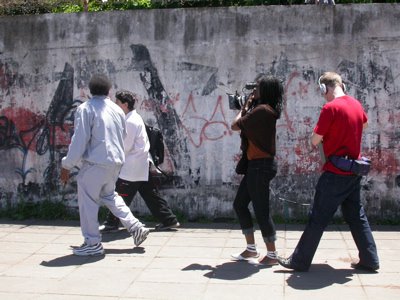
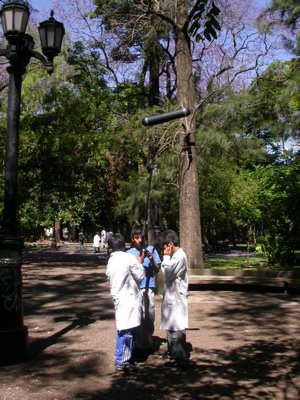

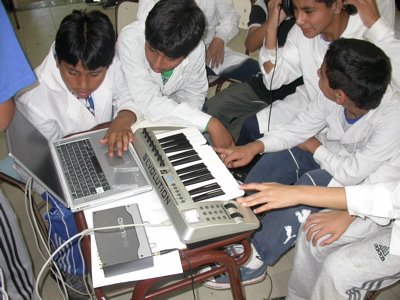
images from 2004 and 2005
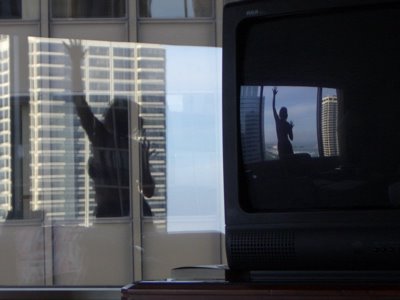
on the eve of the new year it seems to make sense to upload a few pictures from the last 18 months or so. (and I've just learned how to do this). So - here goes:
catwoman in chicago
images from 2005 (1)

Friday, December 02, 2005
a long month
four weeks from hell so I've not had time to post anything, let alone anything erudite here for a while. Some random reflections on events I've been at this autumn:
The Catalyst conference in Manchester which was in turns annoying and vague. A gathering of lots of interesting people but somehow the programme was set up in such a way that it was really difficult to find any spaces for meaningful conversation. And the charlatan Ben Zander's trivial and patronising musings on leadership were enough to force me away from the event a day earlier than I had planned. What a waste of money to put all those distinguished and intelligent people in a room and make them listen to such vacuous nonsense...
The Open Secrets seminar series that Demos has organised - both events I've attended have brought together a decent cross-section of people from the very top of the education and public services tree with practitioners and those like me that shuttle between different worlds. It's been good that a space has been created which draws together people from these different worlds to debate the hot issue of how you do innovation better; one obvious observation is that perhaps if more of these sorts of conversations were an everyday occurrence in education institutions then change might be more readily precipitated...
I went to the launch of The Turning World which is Rose Fenton and Lucy Neal's reflections on their extraordinary quarter century at LIFT. The book tells the story of all the artists, companies and happenings that LIFT brought to London since their 1983 debut. One of my absolutely favourite organisations, LIFT has constantly cut through navel-gazing and pretension that passes for contemporary theatre in many corners of London and brought work into being which is constantly challenging, vexing, mould breaking, etc etc. It's been a continual privilege to have been able to work with LIFT over the last nine or so years. What is so distinctive about LIFT is that it has a catalytic effect on the people touched by the work - it enables people to make journeys and transitions of their own - an example of redistributive leadership in action - (more on that in another post)
I went to Melbourne for the Risky Business conference which featured a really wide range of, in the main, well conceived and executed research projects documenting various arts interventions with young people deemed 'at risk.' What was so refreshing about the event (in spite of my jetlag and occasional sleepiness) was the openness with which the debates were conducted. There was a sharpness about recognising the double-tongued discourses of risk and 'exclusion' when applied to young people, when the last thing they need is to be labelled as is 'risky' and 'excluded'...a book of papers from the conference is planned in the new year and I'm looking forward to it...
I've been in Barcelona a couple of times to set up the teacher-artist partnership exchange. Every time I am in that city I am struck by how public culture, street culture, urbanism and outdoor discourse permeates the whole place...partly climate and partly the industrious and intellectual Catalan sharp and stylish hunger for knowledge and creativity...the big challenge seems to be about inclusion and diversity - how does this highly evolved urban culture learn how to deal with difference and develop education systems which allow access into this urban culture for all? How does a justifiable pride in the extraordinary regeneration story translate into education and learning systems in which all young people can participate, particularly in an arts scene where there is an apparently unstoppable supply of 'talent' in any case ? It may be the home of the 'learning city'movement but there seems still to be a long way to go in opening up further and higher education institutions to participation. I may be doing some more thinking about that in 2006. We'll see. There may also be some parallels to be drawn between what is currently happening in Glasgow's arts education planning and what is happening in Barcelona. Or maybe not.
I've spent far too much time in airport land and passenger processing systems. As the government hypes up the cold weather and threat of energy crisis further in order to build the strange logic (and weird and scary science) around nuclear power, I'm conscious that I've personally done precious little to help the case that our insatiable hunger for energy is at the root of the issue. I've just been lining the pockets of the airlines and the oil companies. No need to rehearse all the arguments here, but if we could just have a serious energy conservation and usage reduction policy we might be able to reduce our dependence on gas guzzling and gigawatts. But I'm utterly hypocritical because I've spent far too much time whizzing around to make a credible argument. If even more people continue to behave like me (as they appear to be doing) we really are staring at the edge of the abyss in environmental terms.
I went to the Designing for the 21st Century 'reflections and projections' conference in Glasgow. This was another useful collection of very disparate projects, very interdiscipinary, very divergent - although, as with so many things, there was a lack of representation from beyond the citadels of higher education in spite of the initiative being about collaboration, knowledge exchange, etc. There was an overwhelming consensus, in spite of this not being the explicit aim of the initiative, that ecological catastrophe is the key design challenge over the next thirty years: and that all designers in whatever sense need to be thinking about this. Design in this sense is about survival - social architecture, intelligent urban systems, re-use and recycling of materials, design for longevity and adaptability, entredonneurship (the first time I've heard that word used, and it deals with some of the problems of the 'social enterprise' model rather neatly I think) and - what I'm interested in - the design of learning systems that build capacity for dialogue, exchange and progression will all be crucial.
The Catalyst conference in Manchester which was in turns annoying and vague. A gathering of lots of interesting people but somehow the programme was set up in such a way that it was really difficult to find any spaces for meaningful conversation. And the charlatan Ben Zander's trivial and patronising musings on leadership were enough to force me away from the event a day earlier than I had planned. What a waste of money to put all those distinguished and intelligent people in a room and make them listen to such vacuous nonsense...
The Open Secrets seminar series that Demos has organised - both events I've attended have brought together a decent cross-section of people from the very top of the education and public services tree with practitioners and those like me that shuttle between different worlds. It's been good that a space has been created which draws together people from these different worlds to debate the hot issue of how you do innovation better; one obvious observation is that perhaps if more of these sorts of conversations were an everyday occurrence in education institutions then change might be more readily precipitated...
I went to the launch of The Turning World which is Rose Fenton and Lucy Neal's reflections on their extraordinary quarter century at LIFT. The book tells the story of all the artists, companies and happenings that LIFT brought to London since their 1983 debut. One of my absolutely favourite organisations, LIFT has constantly cut through navel-gazing and pretension that passes for contemporary theatre in many corners of London and brought work into being which is constantly challenging, vexing, mould breaking, etc etc. It's been a continual privilege to have been able to work with LIFT over the last nine or so years. What is so distinctive about LIFT is that it has a catalytic effect on the people touched by the work - it enables people to make journeys and transitions of their own - an example of redistributive leadership in action - (more on that in another post)
I went to Melbourne for the Risky Business conference which featured a really wide range of, in the main, well conceived and executed research projects documenting various arts interventions with young people deemed 'at risk.' What was so refreshing about the event (in spite of my jetlag and occasional sleepiness) was the openness with which the debates were conducted. There was a sharpness about recognising the double-tongued discourses of risk and 'exclusion' when applied to young people, when the last thing they need is to be labelled as is 'risky' and 'excluded'...a book of papers from the conference is planned in the new year and I'm looking forward to it...
I've been in Barcelona a couple of times to set up the teacher-artist partnership exchange. Every time I am in that city I am struck by how public culture, street culture, urbanism and outdoor discourse permeates the whole place...partly climate and partly the industrious and intellectual Catalan sharp and stylish hunger for knowledge and creativity...the big challenge seems to be about inclusion and diversity - how does this highly evolved urban culture learn how to deal with difference and develop education systems which allow access into this urban culture for all? How does a justifiable pride in the extraordinary regeneration story translate into education and learning systems in which all young people can participate, particularly in an arts scene where there is an apparently unstoppable supply of 'talent' in any case ? It may be the home of the 'learning city'movement but there seems still to be a long way to go in opening up further and higher education institutions to participation. I may be doing some more thinking about that in 2006. We'll see. There may also be some parallels to be drawn between what is currently happening in Glasgow's arts education planning and what is happening in Barcelona. Or maybe not.
I've spent far too much time in airport land and passenger processing systems. As the government hypes up the cold weather and threat of energy crisis further in order to build the strange logic (and weird and scary science) around nuclear power, I'm conscious that I've personally done precious little to help the case that our insatiable hunger for energy is at the root of the issue. I've just been lining the pockets of the airlines and the oil companies. No need to rehearse all the arguments here, but if we could just have a serious energy conservation and usage reduction policy we might be able to reduce our dependence on gas guzzling and gigawatts. But I'm utterly hypocritical because I've spent far too much time whizzing around to make a credible argument. If even more people continue to behave like me (as they appear to be doing) we really are staring at the edge of the abyss in environmental terms.
I went to the Designing for the 21st Century 'reflections and projections' conference in Glasgow. This was another useful collection of very disparate projects, very interdiscipinary, very divergent - although, as with so many things, there was a lack of representation from beyond the citadels of higher education in spite of the initiative being about collaboration, knowledge exchange, etc. There was an overwhelming consensus, in spite of this not being the explicit aim of the initiative, that ecological catastrophe is the key design challenge over the next thirty years: and that all designers in whatever sense need to be thinking about this. Design in this sense is about survival - social architecture, intelligent urban systems, re-use and recycling of materials, design for longevity and adaptability, entredonneurship (the first time I've heard that word used, and it deals with some of the problems of the 'social enterprise' model rather neatly I think) and - what I'm interested in - the design of learning systems that build capacity for dialogue, exchange and progression will all be crucial.
Friday, October 28, 2005
This month's essential reading
Willing Slaves: how the overwork culture is ruling our lives, by Madeleine Bunting
Babylon and Beyond: the economics of anti-capitalist, anti-globalist and radical green movements, by Derek Wall
City of Panic, by Paul Virilio
Babylon and Beyond: the economics of anti-capitalist, anti-globalist and radical green movements, by Derek Wall
City of Panic, by Paul Virilio
Journeys Across My City goes to Barcelona
The Buenos Aires films are being screened in Barcelona as part of the international children's television festival on November 15th. They are also being screened at the Lineout Can Film Festival in Leicester this weekend, and were recently shown again in Sydney. It's nice to see them travelling so well and so far...
More information from Redcurrent Films.
Graham is off to Barcelona again this week to plan the international exchange for the Teacher Artist Partnership programme and also to plot future developments with Journeys Across My City...
More information from Redcurrent Films.
Graham is off to Barcelona again this week to plan the international exchange for the Teacher Artist Partnership programme and also to plot future developments with Journeys Across My City...
Sunday, September 18, 2005
Marimekko exhibition
The Lighthouse in Glasgow is currently hosting a small but fascinating retrospective exhibition about the work of Marimekko, that superb and innovative design/fashion company that became synonymous with Finland's renaissance in the 1960s and 1970s. What Armi Ratia, who founded Marimekko, understood was that the democratic modernism which underpinned the optimistic and sunny culture of the business would benefit both producers and consumers: a kind of updated Bauhaus and William Morris sprit which aimed to democratise radical design, extending beyond clothes into the whole domestic environment. Perhaps no coincidence that 95% of their employees are still women.
The company's design culture was prophetic and pre-figurative in many ways: they rapidly moved beyond boldly printed textiles, and carefully made clothes with clean lines, into accessories, furniture, and thence into architecture and wider design. Marimekko became a total design concept but without cultishness or pretension- because it maintained an ironic, playful, eclectic sprit. The fashion philosophy was always about much more than clothes, and they never designed just for a skinny young minority. Hugely influential, hugely important, they pioneered an ethical, modernist, optimistic aesthetic that still holds promise. This book tells the story. And this article about the exhibition recently appeared in Scotland on Sunday.
The company's design culture was prophetic and pre-figurative in many ways: they rapidly moved beyond boldly printed textiles, and carefully made clothes with clean lines, into accessories, furniture, and thence into architecture and wider design. Marimekko became a total design concept but without cultishness or pretension- because it maintained an ironic, playful, eclectic sprit. The fashion philosophy was always about much more than clothes, and they never designed just for a skinny young minority. Hugely influential, hugely important, they pioneered an ethical, modernist, optimistic aesthetic that still holds promise. This book tells the story. And this article about the exhibition recently appeared in Scotland on Sunday.


Saturday, September 17, 2005
airline of the moment
the future (at least until the oil runs out, and the apocalypse hits) is small aircraft...much simpler, much quicker.
if the trains ran faster then there would be no need to fly...but having spent 5 and a half hours yesterday trying to get from manchester to glasgow by train, one can see the attraction...
if the trains ran faster then there would be no need to fly...but having spent 5 and a half hours yesterday trying to get from manchester to glasgow by train, one can see the attraction...
music of the moment
autobahn, (side a of the LP only, side b is just too cheesy) by Kraftwerk - played very quietly it becomes almost ambient
Sugarcubes albums and 12inches played very loud
Kenneth Leighton's sacred choral music
The milk-eyed mender by Joanna Newsom (a favourite of our 7 year old daughter, but suitable for grown-ups too)
Mpho Skeef's new EP
Sugarcubes albums and 12inches played very loud
Kenneth Leighton's sacred choral music
The milk-eyed mender by Joanna Newsom (a favourite of our 7 year old daughter, but suitable for grown-ups too)
Mpho Skeef's new EP
Saturday, September 03, 2005
devouring apocalypse balloons
Two of the three concerts that Graham did as a pianist with Current 93 live in Toronto in June 2004 have now been released on the Durtro/Jnana label, as a two-CD set: How I Devoured Apocalypse Balloon. Also playing were Michael Cashmore, guitar, Simon Finn, vocals/guitar, Ben Chasny/Six Organs of Admittance, guitar, John Contreras, cello and of course David Michael - late Tibet. The recording captures the unique atmosphere of the concerts and is highly recommended as an excellent document for those familiar and less familiar with Current 93. Also just released is Judas as Black Moth , a retrospective of this highly influential group from the English underground's work.
Monday, August 29, 2005
Birmingham
Went down to Birmingham last Friday to talk to some schools for the Specialist Schools Trust: what a transformation has happened in the city centre since I was last there ten years ago! Trouble is, it's all so shiny and corporate that it looks much the same as any other regional city centre...once again the construction of urban images has driven the development of the downtown to the point where the private and public money has flooded in but there doesn't seem to be much of a vision beyond the usual retail cluster, dull business services and some fairly poor street performances to 'animate' the space. Not good enough! Sure there are the galleries, theatres, exhibition spaces etc but they recede compared to the urban retail spectacle.
I wandered around the shops at the end of the day and no-one appeared to be spending much money; just hanging out like me. is the uk turning into a debt ridden society of cappucino consumers? time for some local distinctiveness I think and time for some radical thinking about placemaking, locality and building capacity for local businesses and difference. otherwise we will all just be living in super-surveillance airport liminal space or in the ghetto, with not much in between. And what is happening in New Orleans is a huge and scary lesson in why there's a need for social infrastructure, social policy, and why the unbridled market will never provide on its own.
I wandered around the shops at the end of the day and no-one appeared to be spending much money; just hanging out like me. is the uk turning into a debt ridden society of cappucino consumers? time for some local distinctiveness I think and time for some radical thinking about placemaking, locality and building capacity for local businesses and difference. otherwise we will all just be living in super-surveillance airport liminal space or in the ghetto, with not much in between. And what is happening in New Orleans is a huge and scary lesson in why there's a need for social infrastructure, social policy, and why the unbridled market will never provide on its own.
Friday, August 12, 2005
Some more festivals for 'Journeys Across My City'
The two Journeys Across My City - Buenos Aires films have been selected for three more film festivals, so you can catch them in lots of different places. They are
5-8 Sept 2005 Talent Circle Super Shorts Festival, London
September 19-23, 2005: 8th edition Auburn International Film and Video Festival for Children and Young Adults, Sydney, Australia
October 2005: Document3 Human Rights International Film Festival, Glasgow
You can also view them online, if you have access to RealMedia, on
UNESCO's website
You can also view them online, if you have access to RealMedia, on
UNESCO's website
Sunday, July 24, 2005
Zero Degrees
My colleague and friend Tim Lawrence writes on Khan/Sawhney/Gormley/Larbi Cherrkauoui's Zero Degrees. Everyone I've spoken to who went to see this says that it is absolutely of its time. If anyone wants an argument for the absolute relevance of the performing arts in a fragmented and dangerous world, this work sounds like it's it....
http://www.sadlerswells.com/whats_on/2005_2006/zero.asp
http://www.sadlerswells.com/whats_on/2005_2006/zero.asp
Tuesday, July 19, 2005
IKEA
Wandering round IKEA looking for mattress covers at 9.30pm on a Saturday night is a waste of a life.
Friday, July 15, 2005
urban tapestries
Interesting blog of research project exploring social production of knowledge, informal knowledge generation and sharing, etc.
Tuesday, July 12, 2005
Applied Imagination
US based blog on 'applied imagination' - creativity in business and for non-profits, linked to the 'creative problem solving institute'.
Tuesday, July 05, 2005
'The Creative College' is published!
At last the book is out. The blurb on the back explains its content:
Creative partnership in education is increasingly being recognised as an inspirational and effective way of teaching and learning. This timely book describes some successful initiatives and suggests how schools, colleges, universities and arts organisations can make such partnerships work.
Arts partnership has been strongly developed at Newham Sixth Form College (NewVIc), a large and diverse sixth form college in east London. The case studies by teachers and artists who developed the projects show how they collaborate with each other and with arts organisations to create a culture of artistic aspiration and success for their students. The contributors analyse what is needed to make such partnerships a success and explore the issues and challenges faced by teachers and artists who want to collaborate in this way.
The idea of creative partnership is firmly located in the context of debates about urban schooling, 'the learning city' and community regeneration. The book weaves together the voices of students, teachers and artists working to create a shared culture for learning.
The Creative College will be of interest to students, teachers and practitioners in education, arts education, community arts and community development.
The contributors are Andrew Blake, Kelly Davidson, Rachel Fell, Sid Hughes and Jo Parkes, and the editor, Graham Jeffery, who was arts research and development manager at NewVIc and is currently seconded to the University of East London as Programme Leader for Performing Arts.
You can order the book from amazon by clicking on the link on the right...
Creative partnership in education is increasingly being recognised as an inspirational and effective way of teaching and learning. This timely book describes some successful initiatives and suggests how schools, colleges, universities and arts organisations can make such partnerships work.
Arts partnership has been strongly developed at Newham Sixth Form College (NewVIc), a large and diverse sixth form college in east London. The case studies by teachers and artists who developed the projects show how they collaborate with each other and with arts organisations to create a culture of artistic aspiration and success for their students. The contributors analyse what is needed to make such partnerships a success and explore the issues and challenges faced by teachers and artists who want to collaborate in this way.
The idea of creative partnership is firmly located in the context of debates about urban schooling, 'the learning city' and community regeneration. The book weaves together the voices of students, teachers and artists working to create a shared culture for learning.
The Creative College will be of interest to students, teachers and practitioners in education, arts education, community arts and community development.
The contributors are Andrew Blake, Kelly Davidson, Rachel Fell, Sid Hughes and Jo Parkes, and the editor, Graham Jeffery, who was arts research and development manager at NewVIc and is currently seconded to the University of East London as Programme Leader for Performing Arts.
You can order the book from amazon by clicking on the link on the right...
Subscribe to:
Posts (Atom)